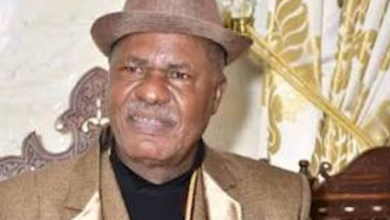
Operatives of the Economic and Financial Crimes Commission (EFCC) on Tuesday sealed off the Abuja residence of former Abubakar Malami, taking possession of the property and mounting a heavy security presence that restricted movement in the area.
The EFCC confirmed that the action was carried out in compliance with a valid court order, stressing that the operation is firmly backed by judicial authority.
This followed a series of recent operations targeting multiple assets linked to Malami across the Federal Capital Territory, including private residences and office spaces. Just a day earlier, operatives had marked the Maitama residence for forfeiture as part of ongoing investigations into suspected financial misconduct.
Malami, however, raised serious concerns over the operation, alleging that EFCC officials arrived early on March 24, 2026, in a heavily armed and intimidating manner, reportedly harassing his family while serving letters of invitation.
He acknowledged the existence of a court order dated January 6, 2026, for interim forfeiture but stated that he was given 14 days to respond, a period he said he had fully observed, including filing applications challenging the order.
The former Attorney-General described the EFCC’s actions as politically motivated, highlighting that former Vice President Atiku Abubakar had visited his residence shortly before the EFCC operation.
Malami emphasised his constitutional right to contest elections, dismissing any notion that the forfeiture action might affect his political ambitions.
The EFCC maintained that its actions are legally grounded, citing the court-issued forfeiture order and the powers granted under Section 5 of the EFCC Act, which allows the agency to investigate economic and financial crimes and recover assets deemed proceeds of unlawful activity.
This incident underscores the tense intersection of anti-corruption enforcement and political activity in Nigeria, highlighting ongoing debates over due process, judicial authority, and the potential influence of political considerations in high-profile asset recovery cases.