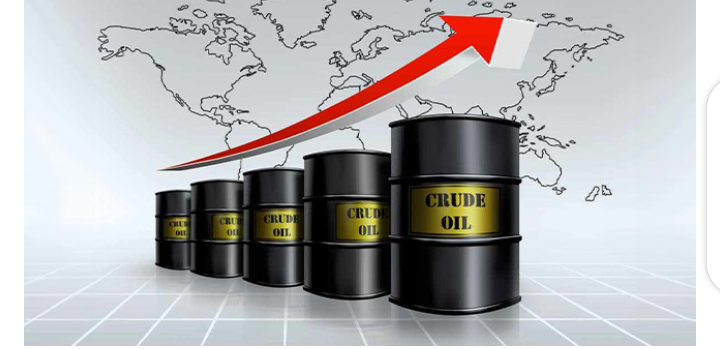
Global oil prices have climbed sharply following reports that the United States is preparing to expand a blockade on Iranian ports, a move that has heightened fears over already strained energy supplies from the Middle East.
Brent crude rose to about $115 (£85) per barrel on Wednesday, up from just over $110 (£81) at Tuesday’s close, before slipping slightly to $114.37 (£84.68) by midday (BST).
The latest movement extended a period of volatility that has dominated global energy markets since the outbreak of conflict in the region.
The increase followed a report by the Wall Street Journal that U.S. President Donald Trump had directed aides to prepare for an “extended” blockade of Iranian ports, aimed at intensifying economic pressure on Tehran.
The escalation comes amid growing instability in the Strait of Hormuz, a strategic shipping channel through which about one-fifth of global oil and liquefied natural gas supplies typically pass.
Iran has significantly restricted movement through the waterway since U.S. and Israeli strikes began on 28 February, effectively disrupting one of the world’s most critical energy corridors.
Iran has also issued warnings that vessels approaching the strait could be targeted, while the United States has said it will intercept or redirect ships heading to or from Iranian ports.
Analysis cited by BBC Verify indicated that at least four vessels tracked from Iranian ports appear to have crossed the US-declared blockade boundary.
Despite recent fluctuations, oil prices remain well above pre-conflict levels. Brent crude fell to $90 a barrel on 17 April after a ceasefire between Israel and Lebanon and a temporary pause in U.S. strikes on Iran, but has since rebounded steadily as tensions persisted.
On Wednesday, President Trump urged Iran to return to negotiations, saying Tehran should “get smart soon” and agree to a deal. In a post on Truth Social, he added that the country “couldn’t get its act together.”
The Wall Street Journal further reported that U.S. officials believe the president has opted to maintain economic pressure through the blockade rather than escalate to direct military action or withdraw from the situation entirely, both of which were described as higher-risk alternatives.
Iranian officials, meanwhile, said on Tuesday that the country could withstand the blockade, insisting it was relying on alternative trade routes to sustain its economy.
The World Bank warned on Tuesday that energy prices could rise by as much as 24 per cent in 2026, potentially reaching their highest level since Russia’s full-scale invasion of Ukraine four years ago, if severe disruptions linked to the Iran crisis ease by May.
Financial markets have also responded to the uncertainty. European stocks fell on Wednesday as investors assessed corporate earnings and awaited the U.S. Federal Reserve’s latest interest rate decision.
The FTSE 100 dropped 0.76 per cent, while the pan-European Stoxx index fell 0.4 per cent by midday. France’s CAC 40 declined 0.54 per cent, and Germany’s DAX also edged lower.
In contrast, Asian markets largely posted gains, continuing a recovery after earlier losses triggered by the initial shock of the conflict.
Analysts said investor sentiment remains fragile as markets reassess the likelihood of a resolution. Arne Lohmann Rasmussen, chief analyst at Global Risk Management, said: “The market is increasingly shifting towards a view that no longer expects a quick and lasting peace, nor an immediate reopening of the Strait of Hormuz.”