The Hydrocarbon Pollution Remediation Project (HYPREP) says it has successfully remediated 17 contaminated sites in Ogoni land as efforts to restore the environment in the Niger Delta continue.
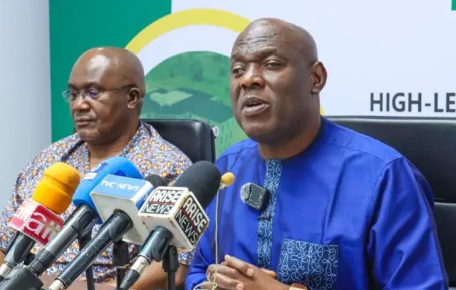
The Project Coordinator of HYPREP, Professor Nenibarini Zabbey, disclosed this on Thursday in Abuja during a news conference ahead of the agency’s high-level donor and diplomatic engagement on environmental restoration in Ogoni land.
HYPREP was established by the Federal Government to implement the recommendations of the 2011 United Nations Environment Programme (UNEP) environmental assessment of Ogoni land.
The forthcoming conference, scheduled for May 26, is expected to bring together members of the diplomatic community, donor agencies and development partners to explore ways of strengthening environmental remediation and sustainable livelihood programmes in the Niger Delta region.
Zabbey explained that the remediation exercise was being carried out in phases based on the UNEP report, which investigated 65 polluted sites and recommended remediation measures.
According to him, UNEP did not assess all contaminated locations in Ogoni land at the time of its report, adding that HYPREP was currently identifying and evaluating additional impacted sites.
“UNEP did not investigate all the contaminated sites in Ogoni land as at when they released the reports, so there are undocumented sites which HYPREP is currently investigating to check if they require remediation.
“Seventeen simple sites which are sites that only soil is contaminated have been remediated and closed out, so we have the close-out certificate with us,” he said.
Zabbey further disclosed that 13 of the UNEP-identified sites had undergone natural attenuation, a process through which contamination levels reduced naturally without direct remediation efforts.
He said the National Oil Spill Detection and Response Agency (NOSDRA) assessed the affected areas and confirmed that they no longer required remediation.
“The National Oil Spill Detection and Response Agency came and investigated and saw that they did not require remediation and closed out the sites,” he added.
The HYPREP coordinator said remediation work was still ongoing at 17 medium-risk complex sites, while contaminant levels at four groundwater-impacted locations had fallen below the benchmark level of 600 micrograms per litre.
“We are making good progress,” he said.
He added that the remaining 18 high-risk sites located in residential communities were undergoing detailed environmental assessment to determine the appropriate remediation strategy before contracts would be awarded.
According to him, the reassessment became necessary because environmental conditions, especially groundwater contamination, may have changed since the UNEP report was released in 2011.
Zabbey also disclosed that additional polluted sites not captured in the original UNEP assessment were currently under investigation for possible cleanup.
On funding, he said details regarding the one billion dollars remediation fund would be unveiled during the forthcoming donor and diplomatic conference.
He explained that the engagement was aimed not only at attracting financial support but also technical and institutional partnerships to strengthen the remediation programme.
According to him, HYPREP is seeking collaboration in areas such as groundwater monitoring, personnel training and the establishment of a centre of excellence for environmental restoration.
Zabbey said the conference would provide development partners and donor agencies an opportunity to assess ongoing work and identify areas where support could be provided.
He reiterated that although significant progress had been recorded since the project commenced in 2016, broader support remained necessary to complete the remediation of all impacted communities in Ogoni land.
Since its establishment, HYPREP has pursued a broad environmental restoration strategy covering public health intervention, livelihood support, infrastructure development, peacebuilding, research and sustainable development initiatives across Ogoni communities.