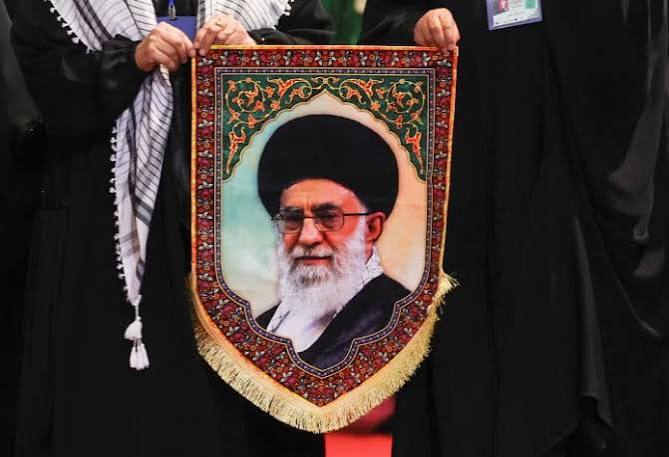
Iran’s ruling establishment is preparing an extensive series of nationwide funeral ceremonies for Supreme Leader Ayatollah Ali Khamenei, aimed at projecting unity and reinforcing the legitimacy of the Islamic Republic following his death in U.S. and Israeli strikes.
According to officials, Khamenei was killed during the opening phase of the conflict, prompting authorities to launch a coordinated programme of mass mourning events beginning this weekend in Tehran and extending across major religious cities.
The ceremonies are expected to include large public processions in Tehran, Qom and Mashhad, as well as commemorations in Iraq.
Government officials said the events are designed to demonstrate national cohesion and public loyalty to the Islamic system at a time of heightened political tension.
Qom Friday prayer leader Ayatollah Mohammad Saidi, speaking in remarks carried by state media, described the planned turnout as politically significant, saying the funeral would amount to “another referendum for the Islamic Republic.”
Authorities are mobilising nationwide participation by arranging transport, accommodation and food for mourners in an effort to attract millions of attendees and project strength following what officials describe as an existential conflict.
Khamenei’s death, alongside reports that his son Mojtaba Khamenei has assumed a leadership role after being injured in the same strike, marks a major turning point in Iran’s political history.
Mojtaba’s limited public visibility since the conflict has fuelled further speculation about the country’s internal power transition.
Despite official efforts to display unity, analysts and reports from within Iran suggested public sentiment is more divided.
Years of economic hardship, sanctions and political repression have contributed to declining support for the leadership, particularly among younger Iranians.
Some residents reportedly expressed frustration at recent unrest and restrictions, with accounts of both subdued compliance and pockets of public celebration following news of Khamenei’s death.
Others, however, are preparing to avoid the ceremonies entirely, citing fear and discomfort with heightened security presence.
The situation contrasts sharply with the 1989 funeral of Ayatollah Ruhollah Khomeini, which drew millions of mourners in a historic display of national unity and religious devotion.
In Tehran, authorities have intensified preparations, converting public spaces into temporary accommodation and offering logistical support for expected crowds.
Foreign dignitaries from countries including Russia and China are expected to attend parts of the mourning events.
The funeral programme would begin in Tehran before moving to Qom, then onward to Iraq’s holy cities of Najaf and Karbala, before concluding in Mashhad, where Khamenei is expected to be buried near the shrine of Imam Reza.
Security measures remained tight across the country, with airspace restrictions and warnings of retaliation against any further attacks.
Officials have framed the ceremonies not only as mourning events but also as a demonstration of resilience and political strength in the face of external pressure.