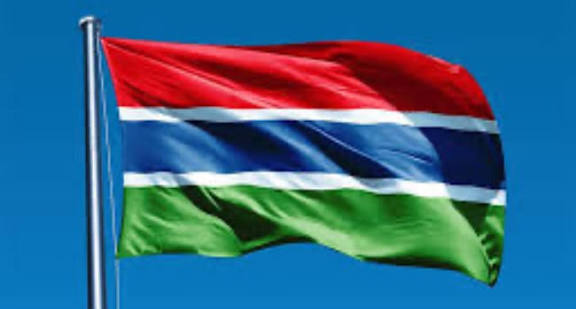
The Gambia’s Independent Electoral Commission (IEC) has announced that the country’s next presidential election would be held on December 5, 2026.
The announcement has sparked criticism of President Adama Barrow’s decision to seek a third term in office.
President Barrow surprised Gambians earlier this year by declaring his intention to run for a third term, citing the 1997 constitution, which allows for multiple terms.
However, critics argued that this move contradicts the country’s aspirations for democratic governance and term limits.
The opposition and civil society groups have condemned Barrow’s decision, accusing him of backtracking on earlier promises to uphold presidential term limits and support a new constitution.
A draft constitution introduced in 2020, which included a retroactive two-term limit clause, was rejected by pro-Barrow lawmakers.
A revised draft that removed the retroactive clause was also voted down in July 2025.
The IEC has outlined the following election schedule:
Presidential Election*: December 5, 2026.
National Assembly Elections: April 10, 2027.
Councillor Elections: May 22, 2027.
Mayoral and Chairperson Elections: June 26, 2027.
The IEC Chairman Joseph Colley emphasised the commission’s commitment to transparency, inclusion, and adherence to electoral laws, urging political groups to comply with registration requirements.
The United Democratic Party (UDP), The Gambia’s largest opposition party, has nominated veteran politician Ousainou Darboe as its presidential candidate for the 2026 election.
Despite this, President Barrow remains the favorite to win, given the opposition’s fragmented nature and lack of a consolidated strategy.
The December 5 date is standard for the country’s electoral calendar under its current constitution.
That constitution, dating from 1997, had enabled then ruler Yahya Jammeh to consolidate the dictatorial hold on power he had held since a coup in 1994.
Jammeh’s two decades in power were marked by significant rights abuses and the earmarking of state funds for the eccentric former leader’s personal use, the current government and rights groups say.
He fled the country in 2017 for Equatorial Guinea after losing the election to Barrow, a relative unknown at the time, and finally conceded and handed over power.