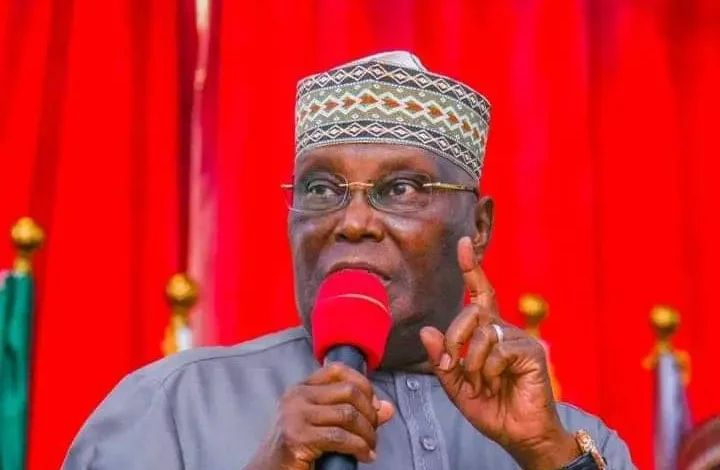
Former Vice President of Nigeria and chieftain of the African Democratic Congress (ADC), Atiku Abubakar, has said the 2027 general elections may mark his final attempt at contesting the presidency.
Speaking in an exclusive interview with ARISE News on Wednesday, Atiku stated that his next presidential bid would likely be his “last outing,” describing the decision as final and unequivocal.
“Certainly, yes. Because I believe that will be my last outing. That is incontrovertible,” he said.
He, however, argued that leadership should combine both experience and generational renewal, insisting that governance requires mentorship from older politicians who have accumulated institutional knowledge over time.
According to him, expectations placed on younger leaders have often not matched performance realities, adding that experience remains crucial in national leadership.
“I represent both the past and the future,” he said, noting that exposure gained through years in public office, particularly as Vice President, remains valuable for effective governance.
Atiku also defended his political record against criticisms that he represents Nigeria’s entrenched political class, arguing that experience should not be dismissed in the search for new leadership.
He referenced his time as Vice President under former President Olusegun Obasanjo, saying it provided him with significant governance exposure that shaped his political outlook.
On his involvement in the African Democratic Congress (ADC) coalition, Atiku said he was one of the key initiators of the alliance formed to strengthen opposition politics ahead of 2027.
“I am one of the initiators, perhaps the leading initiator, of this coalition,” he stated.
He revealed that following the 2023 election loss by the Peoples Democratic Party (PDP), he had advised the party to pursue a broader coalition strategy, but said the proposal was rejected at the time.
Atiku also stressed that the coalition’s focus goes beyond opposing President Bola Tinubu’s administration, stating that it is centred on strengthening democratic institutions and constitutional checks and balances.
He expressed concern that key institutions meant to provide oversight were increasingly being influenced by the executive arm of government.
On internal coalition arrangements, he said members would first attempt to agree on a consensus candidate, but if that failed, a democratic election would be held, adding that he would support whoever emerges, including Labour Party’s Peter Obi if he contests.
Addressing concerns about his northern political base, Atiku maintained that the region remains largely united and continues to be his strongest support base.
He also rejected the idea of a universally accepted zoning arrangement for the presidency, noting that it is only formally embedded in the PDP constitution.
Reflecting on past positions, he admitted that he was wrong to have previously opposed rotational presidency, describing it as a fairer system of political inclusion.
On his strategy for the 2027 election, Atiku declined to give details but warned that a single coalition candidate against President Tinubu would be “dead on arrival,” stressing the importance of regional mobilisation.
He also described the current administration as the worst he has seen in Nigeria, expressing deep dissatisfaction with its performance.
If elected president, he said his immediate priority would be security reform, arguing that no meaningful development can take place without restoring law and order.
Atiku further called for improved welfare, training, and equipment for the armed forces, while also acknowledging corruption challenges within the security system.
He dismissed long-standing corruption allegations against him, insisting they were unproven and had been investigated without any findings of wrongdoing.
Reaffirming his support for restructuring, he said the issue remains important but has been overshadowed by urgent national challenges such as insecurity, poverty, and unemployment.
In his closing remarks, he urged Nigerians to vote out the ruling party, warning that continued governance by the All Progressives Congress (APC) could worsen the country’s future prospects.