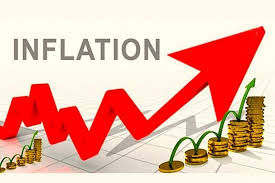
Nigeria’s inflation rate recorded a slight upward movement in March 2026, reaching 15.38 per cent, according to fresh data released by the National Bureau of Statistics (NBS).
The figure represents a marginal increase from 15.06 per cent posted in February.
The NBS report showed that the Consumer Price Index (CPI), which measures changes in the prices of goods and services, climbed to 135.4 points in March, up from 130.0 in the previous month.
This reflects continued pressure on household costs across the country.
On a year-on-year comparison, inflation in March 2026 stood significantly lower than the 27.35 per cent recorded in March 2025, indicating a slower pace of price increases compared to the previous year.
However, month-on-month movements suggest that prices are still rising, with March inflation increasing by 0.32 percentage points over February.
The month-on-month inflation rate was reported at 4.18 per cent, higher than February’s 2.01 per cent by 2.17 percentage points.
This suggested that short-term price pressures intensified during the period under review.
For the 12-month average ending March 2026, the CPI showed a 20.05 per cent increase compared to the preceding year’s average, marking a rise of 1.48 percentage points.
Urban inflation was recorded at 14.64 per cent year-on-year. On a monthly basis, urban prices rose by 3.16 per cent, an increase of 0.61 percentage points compared with February’s 2.55 per cent.
The 12-month average for urban inflation stood at 20.04 percent, slightly below the 20.10 percent recorded in March 2025.
In contrast, rural inflation remained higher at 17.22 per cent year-on-year.
Month-on-month rural inflation surged to 6.73 percent, sharply higher than February’s 0.71 per cent, reflecting stronger price pressures in rural markets.
The 12-month rural average rose to 19.74 per cent, up from 16.81 percent a year earlier.
On a year-on-year basis, it stood at 14.31 per cent, significantly lower than 25.22 per cent recorded in March 2025.
However, on a monthly basis, food inflation eased slightly to 4.17 per cent from 4.69 per cent in February.
The NBS attributed the slowdown in monthly food inflation to price changes in items such as yam, fresh ginger, cassava tubers, groundnuts, Irish potatoes, ogbono, fresh tomatoes, cassava flour, and shelled agricultural produce.
The average food inflation rate over the 12 months ending March 2026 was 18.21 per cent, showing a sharp decline compared to 36.02 per cent recorded in the corresponding period of the previous year.
Core inflation, which excluded volatile agricultural produce and energy prices, stood at 16.21 percent year-on-year, down significantly from 27.12 per cent in March 2025.
On a monthly basis, however, core inflation rose to 4.03 percent, compared to 0.89 per cent in February.
The 12-month average for core inflation was 21.09 percent, representing a decline from 27.34 per cent recorded a year earlier.
At the state level, inflation trends varied widely. Year-on-year headline inflation was highest in Bayelsa at 27.37 per cent, followed by Sokoto at 26.03 per cent and Bauchi at 23.67 per cent.
The lowest increases were recorded in Osun at 5.25 per cent, Kano at 9.85 per cent, and Kaduna at 10.38 per cent.
On a month-on-month basis, Zamfara led with 10.77 percent, followed by Bauchi at 9.37 percent and Sokoto at 9.05 per cent.
The lowest monthly increases were seen in Lagos at 1.54 per cent, Akwa Ibom at 1.80 per cent, and Rivers at 1.89 per cent.
Food inflation across states also showed sharp differences.
Bayelsa recorded the highest year-on-year food inflation at 33.35 per cent, followed by Sokoto at 28.02 per cent and Adamawa at 21.67 per cent.
The lowest were recorded in Kano at 4.29 per cent, Oyo at 4.86 per cent, and Katsina at 7.48 per cent.
On a month-on-month basis, Sokoto again topped the chart with 11.78 per cent, followed by Niger at 8.59 per cent and Gombe at 8.10 per cent. Katsina recorded the lowest increase at 0.09 per cent, followed by Ogun at 0.77 per cent and Adamawa at 1.30 per cent.