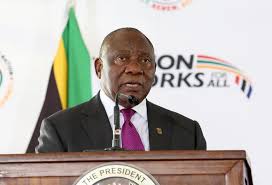
South African President Cyril Ramaphosa has called for stronger cross-border collaboration among African countries to curb the spread of Ebola following outbreaks in the Democratic Republic of the Congo (DRC) and Uganda.
Ramaphosa made the appeal on Monday in a statement issued by the South African Presidency, where he stressed the importance of regional cooperation in responding to the growing health threat.
He commended the governments of the DRC and Uganda for their transparency and swift action in officially declaring the outbreaks.
According to the South African leader, early detection, prompt reporting and decisive intervention remain critical in preventing outbreaks from developing into wider regional emergencies.
The statement followed the declaration by the World Health Organisation (WHO) of an international health emergency after more than 80 deaths were recorded in the DRC from the Ebola outbreak.
The virus has also reportedly spread into Uganda, resulting in infections and fatalities.
Ramaphosa praised neighbouring countries for intensifying emergency preparedness and strengthening coordination efforts to contain the disease.
He also acknowledged the support provided by the Africa Centres for Disease Control and Prevention (Africa CDC) and the WHO in assisting affected nations.
“Ebola does not respect borders,” Ramaphosa said, warning that population movement, insecurity and humanitarian displacement had increased the risk of wider transmission across the region.
He urged both affected and high-risk countries to improve disease surveillance at official and unofficial border entry points.
The president also stressed the need for rapid information sharing among countries, particularly in areas experiencing insecurity and population displacement.
Ramaphosa further appealed to member states of the African Union and international partners to provide urgent financial and technical support to countries battling the outbreak.
According to him, such support should include medical supplies, emergency response assistance and direct aid to affected communities.
He maintained that stronger continental cooperation and coordinated response strategies would be essential to preventing the disease from escalating into a broader public health crisis across Africa.