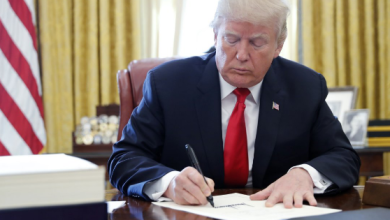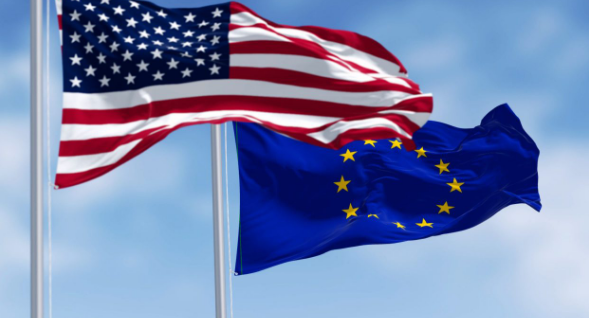
The European Parliament has voted in favour of reducing tariffs on a broad range of United States products, moving forward a trade arrangement previously agreed between the European Union and US President Donald Trump.
The deal is aimed at preventing a return to escalating retaliatory tariff measures between the world’s two largest economies.
The agreement, first reached last year at Trump’s Turnberry golf resort in Scotland, commits the European Union to removing duties on American industrial exports while also expanding preferential access for US agricultural products.
In return, the United States is expected to maintain a 15 per cent tariff rate on most European imports.
Although the framework was concluded months ago, its implementation had faced delays in the European Parliament.
U.S. officials had warned that continued postponement could trigger new tariff increases, with President Trump previously threatening higher duties if deadlines were not met.
The lawmakers eventually approved the measure by a wide margin, also extending a duty-free arrangement for U.S. lobster imports.
The concession, originally introduced during Trump’s first term, forms part of efforts to stabilise trade relations.
The approval effectively removes the final major political hurdle required to bring the agreement into force.
On the U.S. side, authorities are expected to formalise their tariff structure before a temporary reduced-rate system expires later in the year.
However, uncertainty remains over timing and enforcement as Washington continues to review broader trade policy adjustments.
The legislation included safeguard provisions allowing the EU to suspend concessions if the United States fails to meet agreed obligations.
It also provided for periodic reviews if Washington maintains higher-than-expected tariffs on selected industrial goods, particularly metal-based products.
While the vote is expected to ease immediate trade tensions, analysts caution that unresolved issues such as digital taxation and sector-specific tariffs could continue to strain relations between Brussels and Washington in the coming months.