INEC reports over 2.6m registrations in first phase of continuous voter registration


The Independent National Electoral Commission (INEC) has announced that more than 2.6 million Nigerians completed their voter registration during the first phase of the ongoing Continuous Voter Registration (CVR) exercise, which concluded on December 10, 2025.
Speaking at the Nigeria Civil Society Situation Room’s 9th National Stakeholders’ Forum on Elections held at the Sheraton Hotel in Abuja, INEC Chairman, Professor Joash Amupitan, revealed that the total figure of 2,685,725 comprised 1,576,137 online pre-registrations and 1,109,588 physical captures.
According to Amupitan, Osun State led the registration drive with 208,357 new voters, followed by Kaduna (159,669), Plateau (152,650), Imo (145,561), Borno (123,835), and Lagos (123,484). Other states also recorded significant participation, highlighting a growing engagement among citizens ahead of upcoming elections.
Addressing participants at the forum, which carried the theme “Securing Nigeria’s Democracy: Building Consensus for Credible Elections and Accountable Governance,” Professor Amupitan stressed the importance of collaborative efforts among government agencies, civil society organizations, and citizens to safeguard the country’s democratic process.
“Credible elections remain the foundation of our democracy,” he said, emphasising that accountability in governance can only be achieved when elections are free, fair, and transparent.
He noted that Nigeria’s democratic system continued to face threats from misinformation, electoral malpractice, and political violence, and that tackling these challenges requires a multi-sectoral approach involving all stakeholders.
Professor Amupitan highlighted the Commission’s adoption of modern technology to enhance transparency and efficiency in electoral processes.
He cited the Biometric Voter Accreditation System (BVAS) as a transformative tool in voter verification and the IReV portal as a platform enhancing public trust in result transmission.
He however, acknowledged that telecommunication infrastructure challenges persist, particularly in achieving real-time uploads from the country’s 176,000 polling units.
INEC is collaborating with the Nigerian Communications Commission (NCC) and exploring alternative technological solutions to address these gaps.
The INEC chairman expressed concern over historically low voter participation, recalling that turnout during the 2023 general elections was just 27 percent.
He cited the successful voter mobilisation in Anambra State, where PVC collection rose dramatically from 63.9 percent to 98.8 percent, as evidence that civic engagement campaigns can yield results.
Professor Amupitan also confirmed that preparations were underway for the 2026 Area Council elections in the Federal Capital Territory, scheduled for February 21, 2026, which would mark the end of the current tenure for six Area Council Chairmen and 62 Councillors elected in 2022.
The chairman stressing that democracy required a sustained commitment to transparency, innovation, and resilience.
Quoting leadership strategist Simon Sinek, he reminded participants: “Leadership is not about the next election; it’s about the next generation.”
To ensure credible elections, INEC is working closely with security agencies through the Inter-Agency Consultative Committee on Election Security (ICCES) to curb vote-buying, intimidation, and other electoral violations.
Civil society groups are expected to monitor compliance, promote voter education, and hold political actors accountable.
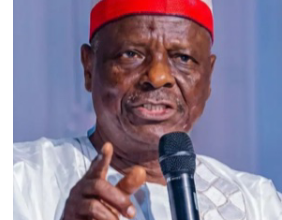
Prof. Joash Amupitan. INEC boss