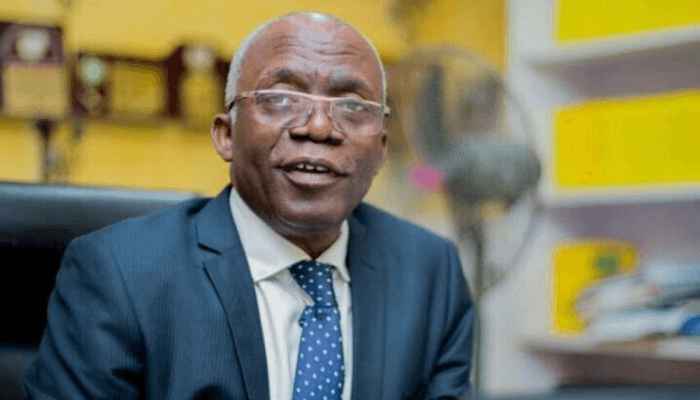
Senior Advocate of Nigeria and human rights activist Femi Falana has criticised the Nigerian Senate for repeatedly postponing the Electoral Act Amendment Bill, warning that the delays could undermine the credibility of the 2027 general elections.
In an interview with Arise News on Sunday, Falana condemned the Senate’s decision to establish yet another committee to review the bill, despite the House of Representatives having passed it in December 2025.
He described the ongoing delay as a “rigmarole” designed to preserve the status quo rather than address urgent electoral reforms.
“Clearly, from the conduct of both chambers of the National Assembly, it is very clear that the members simply want the status quo retained.
”This rigmarole is meant to give the impression to Nigerians that the proposed Electoral Act is being addressed,” Falana said.
The bill, which seeks to introduce electronic transmission of results, stricter penalties for vote-buying, voting rights for inmates, and sanctions against delegates financially induced to manipulate party conventions, has been under discussion for months.
Falana criticised lawmakers for revisiting issues already covered by existing laws and for failing to enforce electoral provisions effectively.
“We operate in an atmosphere of reckless impunity. The only political, important issue today is the gale of defections in Nigeria, yet the National Assembly focuses on time-wasting amendments,” he said.
He noted that previous reforms—including the 2008 recommendation for an electoral offences commission—remain unimplemented.
Falana emphasised the urgent need to codify electronic accreditation and results transmission into law, pointing to controversies in prior elections where multiple candidates claimed victory.
“Last election, we were subjected to a national disgrace when three leading presidential candidates claimed to have won.
”That election petition lasted ten months. Why should it take two years to put these provisions in law?” he asked.
Beyond electoral reform, Falana addressed the handling of alleged military coup plotters and citizens’ rights in Lagos.
On the coup trials, he insisted that “under the current democratic dispensation, it is only the federal high court that is empowered, by virtue of Section 251(2) of the Constitution, to try treason and allied offences.
”The government must adhere to this law.”
Regarding demolitions and protests in Lagos, Falana criticised the state government’s approach, calling night-time evictions using tear gas unlawful.
“Our people are entitled to dignity and housing. If the government wants to demolish, no problem.
”But you must discuss and place them in another location,” he said, citing multiple court rulings protecting residents.
He also defended protesters’ rights, noting that “vulgar abuse cannot attract a defamatory action, criticism is indispensable in a democratic society,” and condemned violent crackdowns on peaceful demonstrations at Alausa.
Falana urged Nigerians and civil society to hold lawmakers accountable: “Unless Nigerians are mobilized to pressure the National Assembly, the new electoral bill will not be passed.
”There is no indication that it will be passed unless we act.”