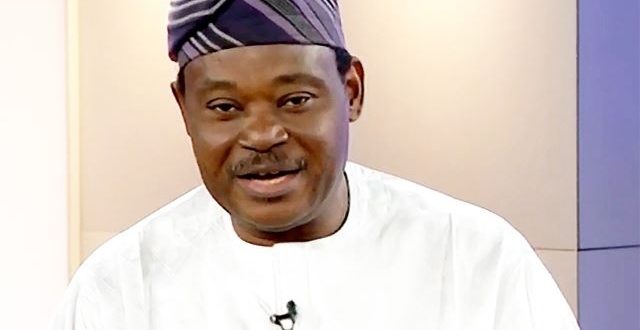
President Bola Tinubu’s recent appointment of Senator Jimoh Ibrahim as Nigeria’s Permanent Representative to the United Nations in New York has sparked intense scrutiny and debate, with critics highlighting Ibrahim’s controversial business history and questioning his suitability for the role.
The decision, announced last week, drew immediate congratulatory messages from prominent figures, including the Ooni of Ife, former Senate President Ahmad Lawan, and Governor Dapo Abiodun.
The commendations praised Ibrahim’s “distinguished career” and described him as the “right man for the job.”
However, investigative observers, including Sonala Olumhense of Punch, warned that Ibrahim’s record raised serious concerns.
According to reports, Ibrahim’s business ventures have frequently ended in collapse, with numerous cases of unpaid workers, legal disputes, and unresolved debts.
Among the examples cited:
NICON Airways – Acquired and collapsed under Ibrahim’s management, leaving roughly 300 workers unpaid.
A 2013 National Industrial Court ruling awarded these workers N1.5 billion, but as of 2024, more than N808 million in salaries and N8.1 million in pension contributions remain unpaid.
Air Nigeria – Between 2010 and 2012, government-backed loans totaling N35.5 billion were reportedly diverted into Ibrahim’s private holdings, causing the airline’s collapse.
The Senate had recommended the Central Bank of Nigeria recover these funds, a directive that remains largely unimplemented.
NICON Insurance – Acquired and downsized, with staff reductions reaching 85 per cent and market share plummeting.
Tax authorities filed a 10-count criminal charge against Ibrahim for N4.86 billion in unpaid taxes and alleged forgery of tax documents.
Further scrutiny extended to Ibrahim’s dealings outside Nigeria.
In 2012, a U.S. court case brought by Aersale Inc. sought $7.68 million over breached aircraft lease agreements, with Ibrahim signing as a personal guarantor.
The Economic and Financial Crimes Commission (EFCC) interrogated him for hours during the proceedings.
Observers warned that these unresolved disputes, coupled with the current operational inefficiencies at Nigeria’s UN Mission including a largely inactive website and incomplete public records, pose risks for Nigeria’s diplomatic credibility.
The mission, located just a block from the UN headquarters, is described as a “ghost” of its potential, lacking adequate communication and organizational capacity.
Critics argued that placing Ibrahim in this high-profile international position sends the wrong message to both domestic and global audiences.
“This is not governance. It is the re-circulation of embarrassment,” Olumhense wrote, describing the move as a reflection of a government that prioritises proximity to power over competence.
The appointment also occurs amid broader criticism of Nigeria’s diplomatic corps, with multiple ambassadors reportedly selected for political patronage rather than merit.
Analysts cautioned that the selection of controversial figures like Ibrahim could undermine Nigeria’s influence at the UN and diminish trust among international partners.
The controversy raised pressing questions: Can Ibrahim effectively represent Nigeria at the world’s most important diplomatic table while unresolved legal, financial, and ethical concerns shadow his career?
Observers said the international press corps in New York will be watching closely and they are unlikely to be impressed by titles alone.