Global markets experienced notable turbulence on Tuesday as crude oil prices fell while equities climbed, following reports that U.S. President Donald Trump indicated a willingness to end the ongoing conflict with Iran, even if the Strait of Hormuz—a strategic chokepoint for global energy—remains closed.
The Wall Street Journal, citing administration sources, reported that Trump and his aides had concluded that a military operation to reopen the strait would extend beyond the president’s projected four- to six-week timeline.
Instead, the administration appears focused on degrading Iran’s missile capabilities and naval forces while using diplomatic pressure to encourage Tehran to reopen the waterway.
Despite these signals of potential de-escalation, investors remained cautious.
On the same day, Trump threatened to destroy Iran’s critical oil export hub on Kharg Island, along with key desalination and power facilities, should Iran refuse to accept a peace deal.
Experts warned that targeting civilian infrastructure could constitute a violation of international law, raising fears of broader escalation.
The tension in the Gulf has disrupted energy supplies, as the Strait of Hormuz accounts for roughly one-fifth of global crude and liquefied natural gas shipments.
Many countries are now scrambling to mitigate the economic fallout.
Governments from the G7, including ministers and central bankers, convened in Paris to assess the war’s impact on energy and markets.
Meanwhile, nations such as Dubai, Norway, Bangladesh, and Sri Lanka implemented measures to ease the burden on households and businesses, ranging from financial support and tax reductions to energy-saving policies and shorter work weeks.
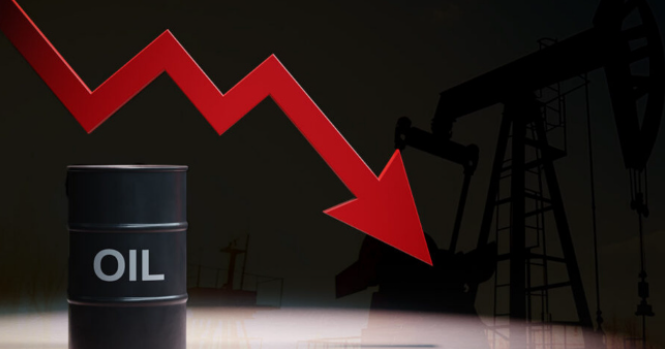
Oil prices, while declining on Tuesday, remain historically high. Brent crude fell 1.3 per cent to $106.04 per barrel, and West Texas Intermediate dropped 0.7 per cent to $102.22.
Equities showed mixed results: markets in Hong Kong, Shanghai, Sydney, Singapore, Wellington, and Jakarta rose, while Tokyo, Seoul, Taipei, and Manila saw declines. In Europe, London’s FTSE 100 gained 1.6 per cent, and New York’s Dow Jones Industrial Average rose 0.1 per cent.
Currency markets also reflected heightened volatility, with the euro and pound slightly stronger against the dollar, while the dollar edged higher against the yen.
Analysts noted that the market is now “headline-driven,” with investors navigating a fine line between optimism for diplomatic resolution and concern over renewed military escalation.
Chris Senyek of Wolfe Research said, “The market continues to react to the Trump Administration’s oscillating signals, shifting between hopes for de-escalation and threats of renewed conflict.”
The geopolitical uncertainty is compounded by Iranian actions.
Tehran reportedly approved a parliamentary plan to impose tolls on vessels transiting the Strait of Hormuz, signaling its intent to maintain control over the waterway.
Meanwhile, U.S. officials, including Secretary of State Marco Rubio, claim to be engaging with “more reasonable” elements within Iran’s leadership, though Tehran has denied any formal negotiations.
Experts warned that any ground offensive or retaliatory attacks by Iran could push oil prices to levels unseen since July 2008, when Brent crude approached $150 per barrel.
The conflict’s economic impact extended beyond energy markets, affecting inflation, trade, and global growth, with policymakers and central bankers monitoring developments closely.
Federal Reserve Chair Jerome Powell commented that energy shocks tend to be temporary, emphasising that monetary policy takes time to respond, and inflation expectations remain “well-anchored beyond the short term.”
As the Iran conflict enters its fifth week, markets remain sensitive to political and military developments, with energy costs now a key variable influencing economic stability worldwide.