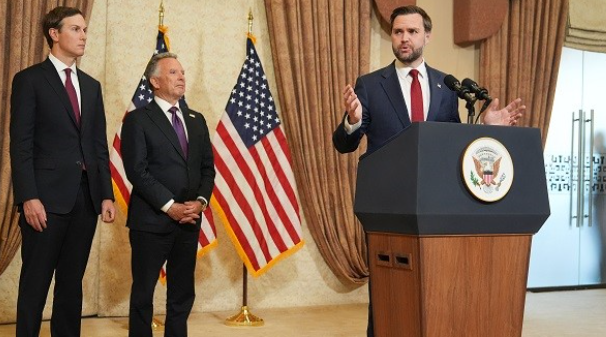
The United States and Iran have failed to secure a deal aimed at ending the ongoing conflict in the Middle East, U.S. Vice President JD Vance said on Sunday following lengthy negotiations held in Islamabad.
Vance stated that he was departing the talks after presenting what he described as Washington’s “final and best offer” to Tehran.
U.S. Vice President JD Vance, speaking after the high-level discussions, said the United States was demanding what he called a “fundamental commitment” from Iran that it would not pursue nuclear weapons capability.
However, he noted that “we haven’t seen that” from the Iranian side, despite what he described as the most senior-level engagement between both nations since the 1979 Islamic Revolution.
Although the talks ended without agreement, Vance indicated that Washington was still allowing Iran time to review the proposal.
The United States had earlier announced a temporary pause in military operations alongside Israel for two weeks to allow room for negotiations.
Pakistan’s Prime Minister Shehbaz Sharif, whose country hosted the discussions, was involved in facilitating the diplomatic engagement.
Islamabad urged both sides to maintain the temporary ceasefire and continue dialogue in order to prevent further escalation.
Iran’s state broadcaster IRIB reported that the negotiations broke down due to what it described as “unreasonable demands of the American side.”
However, Iran’s Foreign Ministry spokesperson later cautioned that it was unrealistic to expect a breakthrough after 40 days of war within a single round of talks.
The conflict traces back to February 28, when joint U.S. and Israeli strikes on Iran triggered a wave of retaliation from Tehran, escalating tensions across the region and causing significant disruption to global markets.
Both Washington and Tehran entered the Pakistan-mediated discussions with firm positions.
The United States intensified pressure during the talks, including reports of naval deployments to secure the Strait of Hormuz, a critical global shipping route.
Signs of disagreement had already emerged earlier, with Iranian media accusing Washington of making “excessive demands” related to control of the strategic waterway, which previously carried a significant share of global oil shipments before disruptions caused by the conflict.
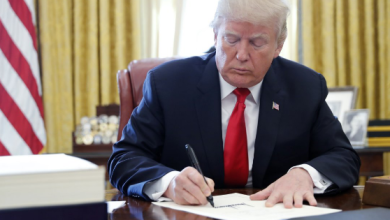
U.S. President Donald Trump, speaking during the negotiations, insisted that Washington had already achieved military success. He claimed that Iranian leadership and key infrastructure had been heavily damaged in earlier strikes.
“Whether we make a deal or not makes no difference to me. The reason is because we’ve won,” Trump said.
After more than 20 hours of discussions in Islamabad, Vance confirmed that no agreement had been reached.
“We are leaving with a very straightforward proposal, a method and framework that represents our final and best offer.
”We will see whether Iran chooses to accept it,” he said before departing the Pakistani capital.
Pakistan’s Foreign Minister Ishaq Dar said his country would continue supporting dialogue between both sides despite the setback.
“We will continue to play our role in facilitating engagement and discussions between the Islamic Republic of Iran and the United States in the days ahead,” he said, adding that it was important for all parties to uphold the ceasefire arrangement.
The negotiations were marked by deep mistrust.
Iranian officials arrived with a large delegation led by parliamentary speaker Mohammad Bagher Ghalibaf and Foreign Minister Abbas Araghchi, while the U.S. delegation included senior officials close to former President Trump.
Iranian representatives had reportedly demanded the release of frozen assets and a halt to Israeli military operations in Lebanon as part of any broader agreement.
U.S. officials, however, maintained that such issues were not open for negotiation in Islamabad.
A key sticking point remained the Strait of Hormuz. Iran’s influence over the waterway has been used as leverage during the conflict, with global oil prices rising sharply as tensions disrupted shipping routes.
The U.S. Navy confirmed that warships had been deployed through the strait in an effort to clear potential mines and ensure safe passage for commercial vessels.
Iran, however, denied that American ships had entered the waterway and warned it would respond to any perceived violations.
Iran’s Revolutionary Guards stated that any assurances of safe passage applied only to civilian vessels under specific conditions, particularly during the temporary ceasefire period.
U.S. officials, meanwhile, argued that reopening the strait was essential for global economic stability, despite Washington’s relatively lower dependence on Gulf oil compared to some European allies.
“We will ensure the strait remains open even if our own reliance on it is limited, because many countries depend on it and are either unable or unwilling to act,” Trump said.
Further complicating the talks was continued violence in Lebanon, where Israeli strikes and ground operations intensified despite broader ceasefire discussions.
Lebanese authorities reported multiple casualties following attacks in the south of the country.
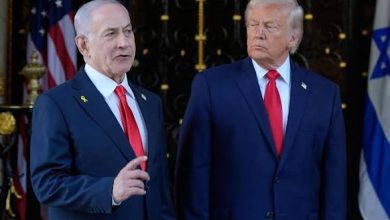
Israel and Lebanon are expected to engage in separate discussions in Washington in the coming week, with Israeli Prime Minister Benjamin Netanyahu expressing interest in a long-term peace arrangement.
However, Israeli officials have maintained that military pressure against Hezbollah would continue.
Iranian parliamentary speaker Ghalibaf, speaking upon arrival in Pakistan, expressed deep skepticism about the United States’ intentions, saying past negotiations had repeatedly failed.
“Our experience with American negotiations has consistently ended in broken promises and disappointment,” he said.
Before leaving Pakistan, Vance reiterated that the United States remained open to further talks but warned that Washington would not tolerate any attempt to delay or mislead the process.
“If Iran is willing to engage sincerely, we will negotiate in good faith. But we will not accept any attempt to manipulate or stall discussions,” he said.
Despite the collapse of the talks, diplomatic channels remain open, with Pakistan pledging continued mediation efforts in the coming days.