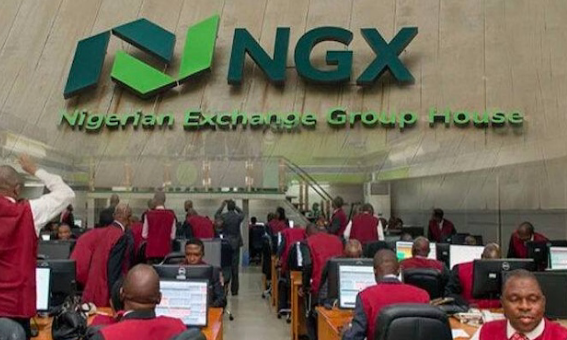
The stock market segment of the Nigerian Exchange Limited (NGX) has continued to defy rising geopolitical tensions, recording a massive N16.13 trillion gain since the beginning of April 2026, driven by strong corporate earnings and Nigeria’s upgrade by FTSE Russell from unclassified to Frontier Market status.
The rally, as of Friday, reflected renewed investor confidence in Nigerian equities despite global uncertainty, positioning the market as one of the standout performers among emerging economies.
Data from the NGX showed that market capitalisation rose from N129.21 trillion at the start of April to N145.335 trillion at the end of the trading week, representing a 12.5 per cent increase within the month.
Similarly, the NGX All-Share Index climbed 12.14 per cent to closed at 225,722.49 basis points, compared with 201,287.78 basis points recorded at the end of March 2026.
The market also crossed the N140 trillion mark during April trading sessions, boosted by strong demand for fundamentally sound stocks and increased foreign participation following the FTSE reclassification announcement.
Year-to-date performance further highlights the momentum, with market capitalisation up by N45.96 trillion or 46.25 per cent from N99.376 trillion at the end of 2025.
The All-Share Index has also risen by over 70,000 points, representing a 45.05 per cent gain over the same period.
Analysts at Cordros Research estimated that Nigeria’s return to Frontier Market status could attract between $840 million and $1.04 billion in passive and discretionary inflows, driven by global portfolio rebalancing.
Despite external risks, analysts said the rally reflected stronger macroeconomic stability, improved corporate earnings, and renewed foreign investor interest in Nigerian assets.
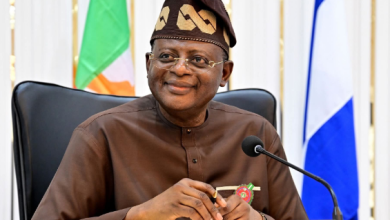
Meanwhile, Nigeria’s new Minister of Finance, Taiwo Oyedele, has pledged continuity in ongoing economic reforms after formally assuming office following the exit of former minister Wale Edun.
In his handover remarks, Oyedele commended Edun’s tenure, noting that significant progress had been made in fiscal coordination, revenue performance, and macroeconomic stabilisation.
He said he would focus on consolidating reforms and delivering measurable economic outcomes aligned with government priorities.
The ministry’s permanent secretaries also pledged full support for the new minister’s agenda.
In fiscal policy developments, the federal government is set to introduce a new Green Tax Surcharge ranging between 2 and 4 per cent on high-engine capacity vehicles from July 1, 2026, as part of broader environmental and revenue reforms.
According to a circular approved by President Bola Tinubu on April 1, 2026, the levy will apply to vehicles above 2,000cc, with higher rates for larger engines, while exempting electric vehicles, mass transit buses, and locally manufactured automobiles.
The policy is part of wider 2026 fiscal reforms aimed at aligning taxation with environmental goals while boosting non-oil revenue.
Officials said the combination of capital market gains and fiscal reforms signals an effort to strengthen economic resilience despite global headwinds.