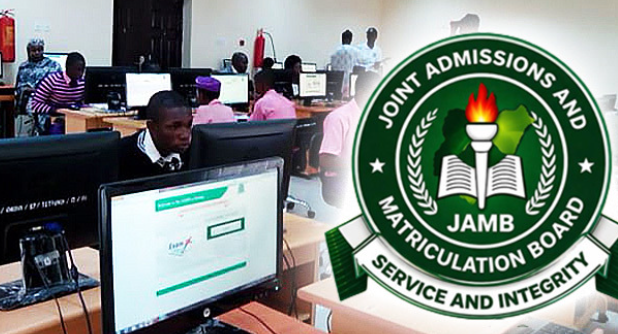
The Federal Government has announced the removal of the Unified Tertiary Matriculation Examination (UTME) requirement for candidates seeking admission into Nigeria Certificate in Education (NCE) programmes.
The Minister of Education, Tunji Alausa, made the announcement on Monday during JAMB’s 2026 policy meeting in Abuja, noting that the decision is aimed at easing the workload on the Joint Admissions and Matriculation Board (JAMB).
Under the new policy, candidates seeking admission into colleges of education would now be required to present a minimum of four credit passes in their O’Level examinations, without sitting for UTME.
“Accordingly, candidates seeking admission into the NCE programme, who possess a minimum of four (4) credit passes, will no longer be required to sit for the UTME,” Alausa said.
However, he clarified that all candidates must still register with JAMB, while their academic credentials would undergo screening, verification and certification through the Central Admissions Processing System (CAPS).
“However, it is imperative to emphasise that such candidates shall mandatorily register with JAMB, and their credentials shall be duly screened, verified, and certified for the issuance of admission letters through CAPS, in accordance with extant regulations,” he added.
The exemption, according to the minister, would also apply to candidates seeking admission into national diploma programmes in non-technology agricultural and related courses.
He explained that the policy aimed to balance wider access to education with the need to maintain the integrity of Nigeria’s admission system.
“This approach strikes a necessary balance between widening access and preserving the integrity of our admission system.
”It will not only ease the pressure associated with UTME but also encourage greater participation in teacher education and agricultural programmes,” he said.
The policy is expected to take effect from the next academic cycle.
Alausa also used the opportunity to reiterate the government’s push towards digital transformation in education, stressing the importance of computer-based testing and modern skills acquisition.
“The global shift towards digitalisation is not a distant prospect; it is an immediate necessity,” he said.
He added that Nigeria is advancing full computer-based testing for national examinations while integrating artificial intelligence and digital skills into school curricula.
“The objective is clear: our graduates must not only possess theoretical knowledge but also the practical skills required to thrive in a modern economy,” he stated.
The new policy marks one of the most significant adjustments to Nigeria’s tertiary admission process in recent years, particularly for teacher education programmes.