The Federal Government has called on stakeholders across sectors to deepen collaboration in order to unlock the vast economic potential of sports tourism in Nigeria.
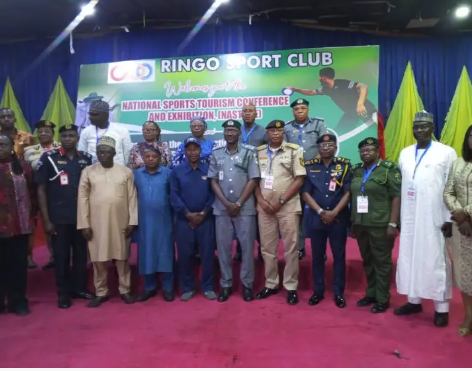
Minister of Art, Culture, Tourism and Creative Economy, Hannatu Musa Musawa, made the call at the opening of the maiden National Sports Tourism Conference and Exhibition (NASTOCE) in Abuja.
The conference was organised by Ringo Sport Club and brought together key players in sports, tourism and creative industries to explore ways of strengthening the sector.
Musawa, represented by the Deputy Director in the Ministry’s Domestic Tourism Promotion Department, Mr Sunday Bisong, commended the organisers for creating what she described as a timely and strategic platform.
She said sports tourism has become a global multi-billion-dollar industry that contributes significantly to economic growth, job creation, destination branding and international visibility.
According to her, Nigeria has all the natural advantages needed to become a leading sports tourism destination in Africa, including a large youth population, cultural diversity, sporting talent and a vibrant creative sector.
She noted that countries around the world are deliberately investing in sporting events, infrastructure and tourism experiences to attract visitors and stimulate economic activity.
“Globally, sports tourism has evolved into a multi-billion dollar industry that significantly contributes to GDP growth, employment generation, destination branding, infrastructure development and international visibility,” she said.
The minister stressed that sports tourism goes beyond major competitions, extending to training camps, recreational sports, wellness tourism, cultural festivals and sports business exhibitions.
She said this wide value chain presents significant opportunities for job creation and enterprise development across multiple sectors.
Musawa reaffirmed the commitment of President Bola Tinubu’s administration to diversifying the economy through non-oil sectors such as tourism, culture, sports and the creative economy.
She explained that efforts are ongoing to reposition Nigeria’s tourism industry as a key contributor to national development.
The minister emphasised that success in sports tourism depends on strong institutional cooperation among ministries, departments and agencies.
“No institution can independently build a thriving sports tourism ecosystem,” she said, calling for deeper inter-agency collaboration.
She urged stakeholders to develop local sporting events such as marathons, wrestling festivals, boat regattas and school sports in ways that attract international participation and tourism.
Musawa also called for investment in world-class sporting infrastructure capable of hosting international competitions.
Beyond infrastructure, she highlighted the need for capacity building among sports tourism professionals, event managers, tour operators and hospitality providers.
She further encouraged the use of digital tools, marketing strategies and storytelling to promote Nigeria’s image globally.
“Our sports icons, entertainers, cultural ambassadors and creative talents can become powerful drivers of destination promotion,” she said.
According to her, sports tourism has strong economic ripple effects, benefiting airlines, hotels, transport operators, restaurants and local artisans during major events.
She urged stakeholders to focus on actionable strategies that would strengthen policy coordination, attract investment and improve Nigeria’s competitiveness in the global sports tourism market.
Also speaking, President of Ringo Sport Club and convener of the event, Mallam Sule, said sports and tourism are interconnected sectors capable of driving economic growth.
He noted that many countries have successfully leveraged the synergy between both sectors to boost their economies.
Sule said the conference was conceived to ensure Nigeria does not miss out on similar opportunities for socio-economic development.
He called on stakeholders to work together in building a sustainable framework that integrates sports and tourism for national growth.