The Universal Basic Education Commission (UBEC) has urged state governments to ensure that available education funds are fully utilised and approved programmes are implemented without unnecessary delays.
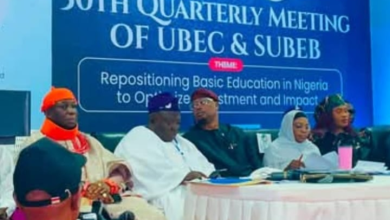
The commission made the call during a courtesy visit to the Delta State Government in Asaba, as part of activities marking its 30th Quarterly Meeting with Executive Chairmen of State Universal Basic Education Boards (SUBEBs).
The meeting, themed “Repositioning Basic Education in Nigeria to Optimise Investment and Impact,” focused on ensuring that financial investments, reforms and new approaches produce measurable improvements in classrooms and learning outcomes.
UBEC commended Delta State for accessing its Universal Basic Education (UBE) matching grants through 2025, while encouraging the state to further explore opportunities under the education component of the World Bank-backed HOPE Education Programme, which has up to $500 million earmarked for education.
The commission explained that states seeking to benefit from the programme must first access their 2026 UBE matching grant and demonstrate implementation of at least 50 per cent of their 2025 Action Plan.
Responding on behalf of the Delta State Government, Deputy Governor Monday Onyeme said updated records showed that the state had approximately N1 billion in unutilised funds, rather than the N8 billion figure earlier reported.
Onyeme said Delta had also achieved about 90 per cent implementation of its 2025 Action Plan and had already accessed its 2026 matching grant.
The discussion also brought attention to Delta’s use of technology to improve accountability among teachers.
UBEC highlighted the state’s Attend360 teacher attendance system, describing it as a technology-driven approach that could serve as a model for strengthening teacher accountability across the country.
“There is no education or quality learning without a good teacher or without a teacher in the classroom,” the UBEC Executive Secretary said.
The commission stressed that while increased funding remained important, the real measure of investment was the impact it ultimately produced for pupils, teachers and schools.
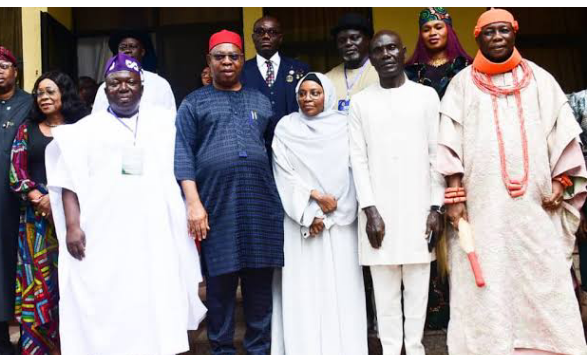
During a separate visit to the Asagba of Asaba, Professor Epiphany Azinge, UBEC called for stronger collaboration between education authorities and traditional institutions in addressing challenges confronting basic education.
Azinge described basic education as the foundation of Nigeria’s future, stressing the need for deliberate measures to ensure that every child has access to quality learning.
He urged UBEC and SUBEBs to pay particular attention to children with disabilities and those from disadvantaged backgrounds, insisting that no child should be excluded from the education system.
The engagements in Asaba underscored the need for governments and education stakeholders to move beyond the provision of funds to ensuring that approved resources are promptly deployed and translated into better learning environments and improved educational outcomes.
UBEC reaffirmed its commitment to working with states to ensure that investments in basic education deliver visible and lasting impact in classrooms across Nigeria.