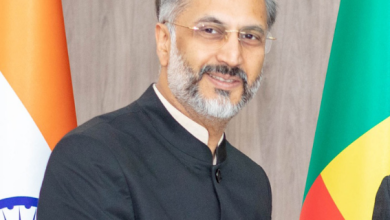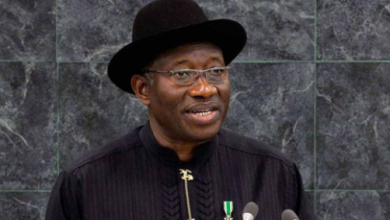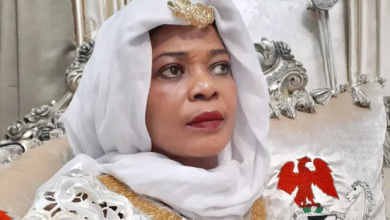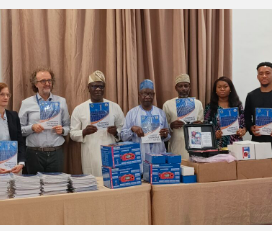
The Federal Government, through the Nigerian Electricity Management Services Agency (NEMSA), has unveiled national guidelines for the interconnection of solar mini-grids to Nigeria’s distribution networks, with technical backing from the German government and the European Union (EU).
The initiative, implemented under the Nigerian Energy Support Programme (NESP), also featured the formal handover of solar testing equipment to NEMSA.
It is aimed at strengthening the country’s growing mini-grid sector and improving access to electricity, particularly in underserved and unserved communities.
Speaking at the launch in Abuja, the Managing Director and Chief Executive Officer of NEMSA, Olusegun Adesayo, said solar mini-grids have become a key solution for expanding electricity access across the country.
He explained that access to electricity remains central to economic growth, social development and national prosperity, stressing that the rapid expansion of interconnected solar mini-grids within the Nigerian Electricity Supply Industry (NESI) requires clear technical and operational standards.
“Solar mini-grids have emerged as a critical solution for electrified, unserved and underserved communities across the country.
”However, as interconnected solar mini-grids continue to expand within NESI, there is an increasing need for clear technical and operational frameworks to ensure that these systems are integrated safely, efficiently and sustainably into existing distribution networks,” he said.
Adesayo said the new guidelines provide detailed procedures, technical specifications, interconnection models and operational standards needed to integrate solar mini-grids without undermining grid stability, power quality, system reliability and public safety.
He added that the framework would help reduce uncertainty for investors and developers while improving cooperation among distribution companies, regulators, mini-grid developers and other stakeholders.
“We are confident that this document will significantly enhance investor confidence and accelerate the deployment of interconnected renewable energy systems across Nigeria,” he said.
Also speaking, the Permanent Secretary of the Federal Ministry of Power, Mahmuda Mamman, represented by Mustapha Abba, said renewable energy, especially solar power, remains central to the Federal Government’s drive to expand electricity access, strengthen energy security and promote sustainable development.
He noted that both interconnected and isolated solar mini-grids are already supplying reliable electricity to communities and productive users that previously lacked adequate access.
“As this segment of the electricity market continues to grow, it becomes imperative to establish clear technical and operational frameworks that will ensure safety, reliability and efficient coordination between solar mini-grid systems and existing distribution infrastructure,” he said.
Mamman commended NEMSA for leading the development of the guidelines and acknowledged the support of NESP, the EU, the Government of Germany and GIZ in the project.
He added that the guidelines would strengthen investor confidence, reduce regulatory uncertainty, improve system reliability and support the sustainable integration of renewable energy into Nigeria’s power sector.
In his remarks, Head of Cooperation at the European Union Delegation to Nigeria, Massimo De Luca, stressed the importance of maintaining strong technical standards as interconnected mini-grids continue to expand.
“As we see the model of interconnected mini-grids really taking shape in our country, we need to be mindful of the standards that we apply when we integrate a private sector-led mini-grid into the network of a distribution company.
“If the standards applied in the interconnection are not good, there cannot be good delivery. We owe communities a duty of care to ensure that these standards are not only established but fully complied with by all parties involved,” he said.
Also speaking, Dr Karin Jasen, Head of Development Cooperation at the German Embassy in Nigeria, reaffirmed Germany’s support for Nigeria’s energy transition agenda, including efforts to expand electricity access, strengthen institutions and attract private investment into the renewable energy sector.