Health authorities are raising fresh concerns over the rapidly expanding Ebola outbreak in Central Africa after confirmed infections climbed to nearly 500 cases, according to the latest figures released by the World Health Organisation (WHO).
The outbreak, which has spread across the Democratic Republic of Congo (DRC) and neighbouring Uganda, is increasingly being viewed as one of the most serious public health emergencies on the continent in recent years.
In its latest situation report released on Saturday, the WHO said a total of 471 confirmed Ebola cases and 84 deaths have been recorded in the two countries.
The figures included 452 confirmed infections and 82 deaths in the Democratic Republic of Congo, where authorities officially declared the outbreak three weeks ago.
Uganda has so far reported 19 confirmed cases and two fatalities linked to the virus.
The latest numbers represent a sharp increase from the previous day’s report, with health officials recording an additional 100 cases and 20 deaths within 24 hours.
The growing number of infections has intensified fears that the outbreak could develop into one of the largest Ebola epidemics ever recorded.
The WHO has already classified the outbreak as an international public health emergency, reflecting concerns about the speed of transmission and the potential for further spread across borders.
Public health experts warn that without aggressive intervention, the current situation could escalate significantly.
A senior official of the United States Centres for Disease Control and Prevention (CDC) said projections indicate that the outbreak could eventually approach the scale of the devastating West African Ebola epidemic of 2014.
That outbreak resulted in more than 28,000 infections and claimed over 11,000 lives across several countries.
“That scale is possible,” said Jason Asher, Director of the CDC’s Center for Forecasting and Outbreak Analytics, during a press briefing.
Health authorities believe the current outbreak may have been circulating for some time before it was officially detected and declared in northeastern Democratic Republic of Congo on May 15.
The virus responsible for the outbreak belongs to the rare Bundibugyo strain of Ebola, a species for which there are currently no approved vaccines or specific treatments.
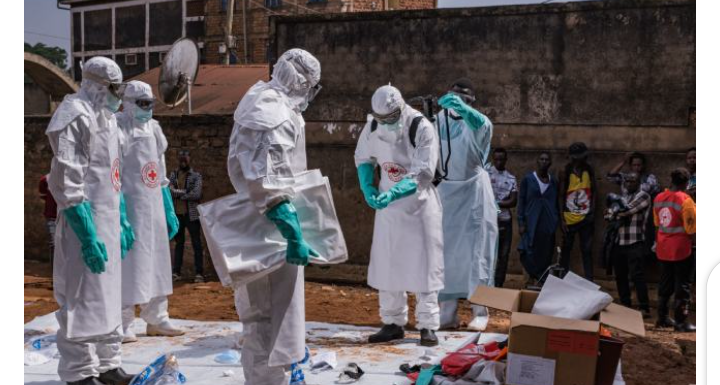
Ebola is transmitted through direct contact with infected individuals, contaminated bodily fluids, or infected materials.
Over the past five decades, outbreaks of the disease have killed more than 15,000 people across Africa, making it one of the continent’s deadliest viral illnesses.
Experts said early detection, rapid isolation of patients and effective contact tracing remain the most important tools available for containing the disease.
In response to the worsening situation, the WHO and the Africa Centres for Disease Control and Prevention have unveiled a major emergency intervention programme aimed at curbing the outbreak.
The six-month response strategy is valued at $518 million and would focus on strengthening disease surveillance, laboratory testing, infection prevention and emergency response capacity in affected communities.
Health officials said the funding would also support frontline healthcare workers and improve preparedness in neighbouring countries that may be at risk.
Addressing journalists, WHO Director-General, Tedros Adhanom Ghebreyesus, warned that health authorities are racing against time to contain the outbreak.
“The outbreak is moving fast, and we are still playing catch-up.
“We need to stop the outbreak where it is, support countries that are responding today, and ensure that neighbouring countries are ready to detect and act quickly if cases appear, ” he said.
He stressed that the outbreak remains controllable if governments, health agencies and international partners act swiftly and collectively.
“This is a serious outbreak and its one we know how to stop but we need to move fast and together,” Tedros added.
As cases continued to rise, health experts are calling for stronger regional coordination and increased international support to prevent further transmission.
With infections already confirmed in more than one country and concerns growing over cross-border movement, authorities said vigilance, public awareness and rapid response measures would be critical in determining whether the outbreak can be contained before it reaches a much larger scale.
For now, health agencies remain focused on tracking infections, isolating confirmed cases and protecting vulnerable communities as Central Africa confronts another major Ebola challenge.