The Federal Government recorded a total oil revenue shortfall of N2.79 trillion in the third quarter (Q3) of 2025, as it realised only N2.45 trillion, representing 31.87 per cent of its budget projection for the period.
However, non-oil revenue performed strongly within the review period, generating N5.25 trillion, or 68.18 per cent of projections.
The performance was driven by improved collections from Value Added Tax (VAT), the Electronic Money Transfer Levy (EMTL), independent revenue sources, and the Tertiary Education Trust Fund (TETFund) tax.
The figures were contained in the Q3 2025 Budget Implementation Report (BIR).
The report noted that delays in the release of quarterly implementation reports, as required under the Fiscal Responsibility Act, 2007, have remained a recurring subject of public concern.
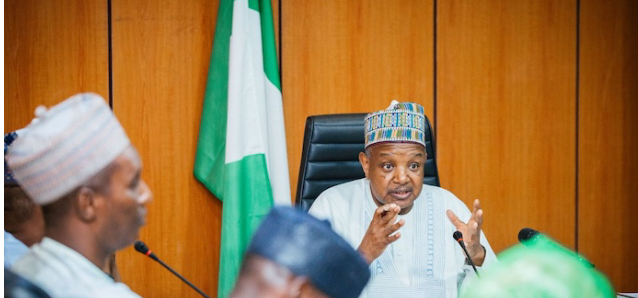
In the preface to the report, the Minister of Budget and Economic Planning, Senator Abubakar Atiku Bagudu, said revenue shortfalls persisted across both oil and non-oil sources.
He stated that total Federal Government revenue stood at N7.70 trillion, while expenditure reached N8.03 trillion, resulting in a fiscal deficit of N328.57 billion.
The deficit was financed through privatisation proceeds and domestic borrowing.
“Despite fiscal pressures, the government prioritised capital investment, highlighting the ongoing imperative to strengthen domestic revenue mobilisation and ensure fiscal sustainability,” Bagudu said.
The report showed that aggregate expenditure, including Government-Owned Enterprises and project-tied loans, stood at N8.03 trillion, compared to a prorated projection of N13.75 trillion.
Non-debt recurrent expenditure amounted to N2.66 trillion within the period, while debt servicing gulped N3.41 trillion, coming in 4.80 per cent below projection.
It noted that the fiscal deficit for the quarter stood at N0.33 trillion, lower than projected, and was financed mainly through privatisation proceeds and domestic borrowing.
The document further observed that volatility in oil revenue continues to expose fiscal outcomes to production and price shocks, while structural underperformance persists amid weaker market conditions.
It also warned that Nigeria’s debt service-to-revenue ratio remains high, limiting fiscal space and necessitating urgent revenue mobilisation and expenditure rationalisation.
According to the report, cash management bottlenecks, including delays in bottom-up cash planning, continued to slow project execution and increase cost risks.
The report also outlined key reform priorities aimed at improving fiscal management, including more realistic benchmarks aligned with verifiable oil production capacity and conservative price assumptions to enhance resilience against external shocks.
It further recommended expanding revenue through stronger compliance enforcement, rationalising tax expenditures, accelerating the e-Customs rollout, and improving independent revenue remittances.
On expenditure efficiency, it stressed the need for institutionalising value-for-money audits and prioritising high-impact projects with measurable economic returns.