News
FG Launches FreeTV, Expands Digital Broadcasting

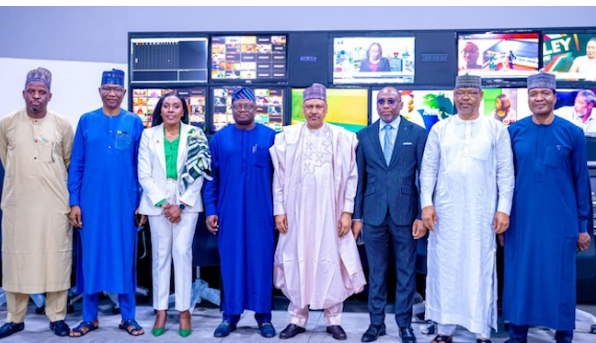
The Federal Government has unveiled FreeTV, a new digital television platform offering more than 100 free-to-air channels, as part of efforts to accelerate Nigeria’s transition from analogue to digital broadcasting.
The initiative was officially launched on Wednesday in Abuja by the Minister of Information and National Orientation, Mohammed Idris, during a ceremony held at the headquarters of Nigerian Communications Satellite Limited.
The launch also marked another major step in the implementation of Nigeria’s Digital Switch Over (DSO) programme, a long-running project aimed at modernising the country’s broadcasting industry and expanding access to digital television services.
Under the new platform, Nigerians would have access to a broad selection of content, including news, sports, movies, music, educational programmes, children’s entertainment and dedicated indigenous language channels in Yoruba, Hausa and Igbo.
According to the government, the service will be delivered through both satellite and terrestrial transmission networks, while a dedicated mobile application will further extend access to viewers across urban and rural communities.
Officials explained that users would not need to purchase new television sets to access the service, provided they already possess compatible DVB-T2 or DVB-S2 decoders.
Existing free-to-air decoder users with compatible devices may not require additional equipment.
Speaking at the event, Idris described the Digital Switch Over programme as a transformative investment capable of creating economic opportunities and strengthening Nigeria’s media landscape.
“A fully implemented DSO ecosystem will create jobs, stimulate local manufacturing, expand audience reach, strengthen content production, increase advertising opportunities, and unlock new revenue streams for broadcasters and content creators,” he said.
The minister noted that the project represented a landmark achievement in Nigeria’s broadcasting history and reflects the commitment of President Bola Tinubu to digital transformation, innovation and infrastructure development.
He stressed that the DSO initiative goes beyond a simple technology upgrade.
“The Digital Switch Over project is not simply a technological transition; it is a critical step towards modernising the country’s broadcasting industry,” Idris stated.
He added that the programme aligned with the administration’s Renewed Hope Agenda, which prioritises connectivity, economic growth and technological advancement.
“This launch is not merely a broadcasting milestone; it is part of a broader national effort by the Federal Government to build a more connected, more competitive, and more prosperous Nigeria,” he said.
The minister disclosed that consultations were held with key stakeholders across the broadcasting value chain before the launch.
Participants included broadcasters, signal distributors, set-top box manufacturers, content creators, NIGCOMSAT, DigiTeam, the Broadcasting Organisations of Nigeria, the Advertising Regulatory Council of Nigeria and other industry players.
According to Idris, despite differing opinions on some implementation strategies, stakeholders unanimously reaffirmed their commitment to the success of the Digital Switch Over programme.
“One important message emerged clearly from that engagement: all stakeholders remain united in their commitment to the successful implementation of the Digital Switch Over programme in Nigeria,” he said.
He further explained that the government is pursuing a hybrid broadcasting model that combines Digital Terrestrial Television (DTT), satellite-based Direct