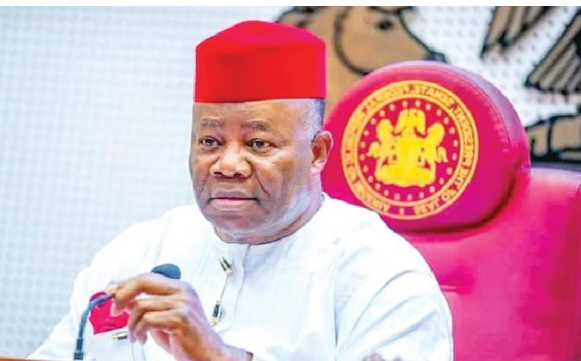
President of the Senate, Senator Godswill Akpabio, has said Nigeria’s strengthened national identity management system is already delivering major security benefits, including helping security agencies track and arrest suspected terrorists attempting to enter the country.
Akpabio made the disclosure on Friday after President Bola Tinubu signed the repealed and re-enacted National Identity Management Commission (NIMC) Bill into law at the State House, Abuja.
He explained that the integration of government identity databases has significantly improved the ability of security operatives to detect criminals at entry points.
“Minister of Interior has already started synchronizing the NIMC together with other equipment that he has in his office, and they’re yielding results.
”Just last week, we were able to apprehend terrorist chiefs who were coming in from Saudi Arabia, in Katsina, of all places.
”When they landed, they just put their names on the computer; it brought out that these are criminals, and they arrested them,” Akpabio said.
According to him, the newly signed law will modernise Nigeria’s digital identity framework, strengthen border control, enhance national security, and improve economic planning through better data integration.
He noted that the previous identity management law had been in place for 19 years without major updates despite rapid technological changes, adding that the new Act brings Nigeria in line with global standards.
Akpabio also said lawmakers carried out extensive consultations, including public hearings and international benchmarking, before passing the legislation.
“We had to go around to do public hearings, to send people outside Nigeria to find out what obtains in other climes.
”It wasn’t something we had to rush because we always want to ensure that any legislation we do outlives us,” he said.
He further linked the reform to broader security efforts under the Tinubu administration, including the proposed creation of state police.
“We’ve done the same thing for 66 years, but the result is continuous insecurity in the country.
”So it’s important that we all work together for the benefit of all Nigerians,” he added.
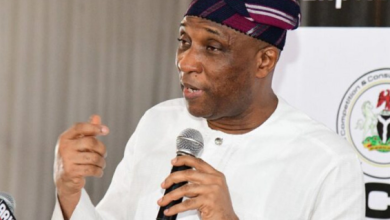
Minister of Interior, Olubunmi Tunji-Ojo, described the new Act as a major step forward for Nigeria’s security architecture, saying it would allow better harmonisation of identity records across government agencies.
“It’s about identity management, it’s about harmonizing identity, synchronizing database, and of course being able to ensure interoperability and ability to have secure handshake,” he said.
He, however, declined to disclose operational details of security processes, noting that they are sensitive.
Director-General of NIMC, Bisoye Coker-Odusote, also described the law as a landmark reform that closes a 19-year gap in Nigeria’s identity system and strengthens digital trust across government institutions.
She said the updated framework would improve citizen verification, data sharing among agencies, and overall digital transformation in governance.
The Federal Government said the reform is expected to enhance national security, improve planning, and support broader economic development goals.