The umbrella body of the Ndokwa ethnic nationality, the Ndokwa Neku Union has concluded its General Assembly with far-reaching resolutions aimed at strengthening internal governance, improving security coordination, and advancing political representation in Delta State.
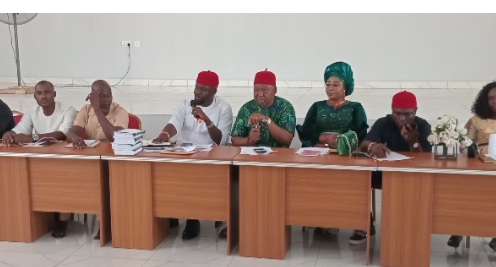
Meeting held on Saturday at Ndokwa House in Kwale, the assembly brought together executive members, clan leaders, and President-Generals from across Ndokwa communities in a gathering described as highly representative and unity-driven.
Addressing journalists after the meeting, the President-General of the NNU, Chief Amechi Asugwuni, said the assembly reaffirmed that the Ndokwa General Assembly remained the supreme decision-making body on matters affecting the Ndokwa nation.
A major decision at the meeting was the proposal that the three local government councils in Ndokwa land should jointly fund the maintenance, security, and administrative operations of Ndokwa House.
The aim is to create a sustainable system that protects the facility and prevents deterioration or vandalism.
The union also intensified its push for political restructuring, backing the creation of Ndokwa East Constituency II.
Leadership of the body is expected to engage key political actors to support ongoing legal processes tied to the demand, with regular updates to the General Assembly.
On security, the assembly approved plans for a dedicated security summit involving local government chairmen.
The proposed forum is expected to design a coordinated grassroots security framework before presenting recommendations to the state government for action.
In a move to deepen democratic participation, the union resolved to invite electoral candidates in Ndokwa land to publicly present their manifestos and development plans.
The initiative is intended to help communities make more informed political choices.
The assembly also reaffirmed a strong position on identity, insisting that “Ndokwa” remains the authentic and unified name of the people.
It rejected any attempt to alter the identity while simultaneously calling for the federal constituency to be formally renamed “Ndokwa Federal Constituency” in place of the current hybrid designation.
According to the leadership, strengthening unity and grassroots involvement remains central to achieving long-term development goals, while elected officials will be held more accountable through collective community engagement.
The meeting also witnessed the inauguration of two executive members who emerged through a recent by-election, further reinforcing the union’s internal leadership structure.