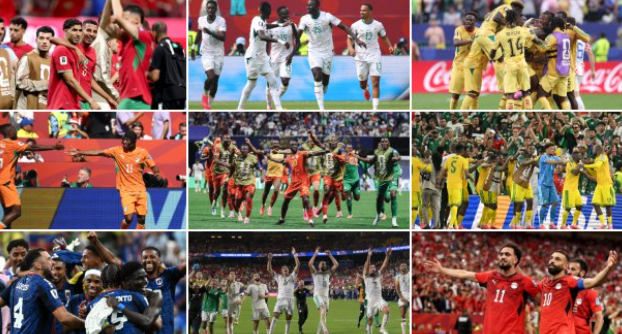
Africa has made history at the 2026 FIFA World Cup after a record nine nations advanced to the Round of 32, marking the continent’s strongest-ever collective performance on football’s biggest stage.
The expanded 48-team tournament has provided more qualification slots for African teams, but the continent’s representatives have gone beyond expectations, delivering disciplined defending, attacking flair and several notable upsets to reach the knockout phase.
The qualified nations include South Africa, Morocco, Egypt, Ghana, Algeria, Senegal, DR Congo, Cape Verde and Ivory Coast, all of whom now carry Africa’s hopes into the first-ever 32-team knockout round.
Their combined achievement represents the highest number of African teams ever to progress beyond the group stage in World Cup history, underscoring the continent’s growing competitiveness in global football.
The Round of 32 fixtures present tough challenges for the African sides, with matchups against traditional football powerhouses across Europe and the Americas.
South Africa will face Canada in Los Angeles, while Morocco take on the Netherlands after an impressive unbeaten group run. Senegal meet Belgium, Egypt face Australia, and Ghana are set for a showdown with Colombia.
Algeria will battle Switzerland, DR Congo take on England, Ivory Coast face Norway, and Cape Verde continue their remarkable debut knockout campaign against defending champions Argentina.
Despite the difficult pairings, African teams have shown growing confidence and tactical maturity throughout the tournament, with several sides already surpassing expectations set before kickoff.
Morocco continue to build on their historic semi-final run from the previous World Cup, while Senegal and Egypt have reinforced their status as consistent performers on the global stage. South Africa’s qualification has energised fans, and Cape Verde’s progression has emerged as one of the tournament’s standout stories.
For DR Congo, Ghana, Algeria and Ivory Coast, reaching the knockout rounds reflects sustained progress in player development and the increasing strength of domestic and diaspora talent pools.
Analysts said the record representation signals a narrowing gap between Africa and traditional football giants, with more teams now capable of competing deep into the tournament.
With the knockout stage now underway, every match becomes decisive, offering African nations an opportunity to further reshape perceptions of the continent’s footballing strength.
A place in the quarter-finals is now seen as a realistic target for several sides, while long-standing dreams of an African World Cup champion remain alive.