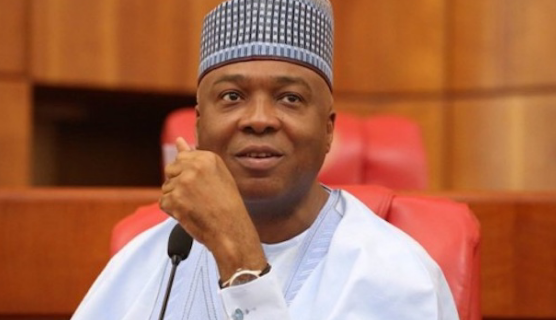
Former President of the Nigerian Senate, Bukola Saraki, has called for a fundamental shift in Africa’s development strategy, warning that foreign aid cannot close the continent’s massive infrastructure financing gap estimated at between $130 billion and $170 billion annually.
Speaking at the Global Strategic Advisory Group meeting on Tuesday in Italy, Saraki said Africa must reduce dependence on external assistance and instead prioritise domestic resource mobilisation, industrialisation, and stronger institutions to drive long-term growth.
He argued that the recent decline in United States development assistance should not be viewed solely as a setback, but as an opportunity for Africa to redesign its development model and pursue greater self-reliance.
Saraki noted that while aid cuts may worsen short-term challenges in health and humanitarian sectors, the deeper issue is Africa’s structural dependence on external funding and weak productive capacity.
He pointed out that Africa receives only a fraction of what is needed to bridge its infrastructure deficit, adding that development assistance has historically been far below the continent’s financing requirements.
According to him, relying on donor-funded programmes with short project cycles has weakened institution-building, which requires sustained investment over decades rather than a few years.
The former Senate President also criticised existing global trade structures, arguing that Africa continues to export raw materials while importing finished goods, limiting job creation and value retention.
He cited commodities such as cocoa and lithium, noting that Africa earns far less from global value chains than it should due to limited local processing and industrialisation.
Saraki stressed that Africa’s economic transformation depends on shifting from raw exports to value-added production, which would generate more jobs, increase revenues, and drive technology transfer.
He also called for stronger fiscal systems, improved tax collection, and greater use of domestic and diaspora capital to finance development priorities.
Saraki further highlighted the importance of institutional reforms, including stronger governance, independent judiciaries, and transparent electoral systems, as foundations for sustainable economic growth.
He urged faster implementation of the African Continental Free Trade Area (AfCFTA), saying deeper regional trade integration could unlock Africa’s $3.4 trillion single market potential.
According to him, Africa’s large youth population remains a key asset, but only sustained investment in education, skills, and innovation can convert it into economic strength.
Saraki noted that Africa does not need new aid-dependent relationships, but equal partnerships focused on investment, industrial growth, and shared prosperity.