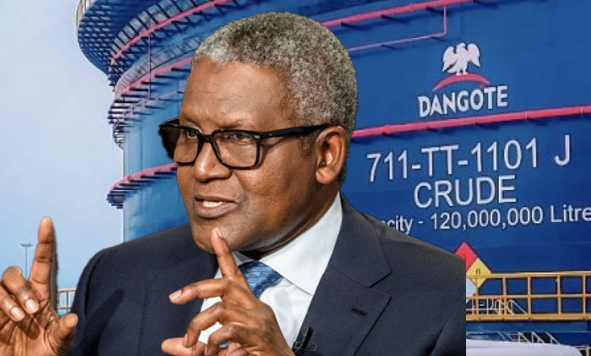
The Dangote Petroleum Refinery has raised $750 million through its debut Eurobond, marking a significant step in its efforts to diversify funding sources and strengthen its financial position ahead of a planned public listing.
The five-year dollar-denominated bond, due in July 2031, was priced at par with a 7.50 per cent yield and issued through a Rule 144A private placement targeted at qualified institutional investors in the United States and other international markets.
The transaction followed a similar $750 million Eurobond raised earlier by Dangote Fertiliser, reflecting a broader funding strategy by the Dangote Group to tap international capital markets and support its expansion drive.
Market analysts said the latest issuance signals growing investor confidence in the group’s export-oriented businesses, with international investors increasingly distinguishing strong Nigerian corporate credits from broader sovereign risk concerns.
The refinery’s bond reportedly included a make-whole call option tied to U.S. Treasury yields, providing flexibility for refinancing while protecting investor returns.
It also priced slightly below the earlier fertiliser issuance, a development linked to improved operational performance at the refinery.
Reports indicated that refining capacity has approached 700,000 barrels per day during test runs, strengthening market perception of the project as it scales up production.
The new fundraising brings Dangote Group’s total international debt issuance this year to $1.5 billion, with proceeds expected to be used to restructure existing obligations and replace higher-cost local borrowing with longer-term dollar-denominated financing.
The group is also positioning for a major expansion phase, which includes plans for a potential secondary listing of Dangote Cement in London and a proposed dual-listing IPO for the refinery.
Meanwhile, the financing deal was supported by a syndicate of global banks, including JPMorgan, Bank of America Merrill Lynch and Standard Chartered, underscoring sustained international appetite for large African industrial assets.
In a separate development, the refinery announced another reduction in the ex-depot price of petrol, its fourth cut within one month.
The company said the latest N50 per litre reduction brings cumulative petrol price cuts to over N200 per litre since late May, while also reducing diesel and aviation fuel prices significantly within the same period.
It attributed the reductions to improving crude supply conditions and inventory cycles, explaining that current product pricing reflects earlier crude purchases made at much higher international prices.
According to the refinery, average crude costs stood at $124.80 per barrel in May and $95.25 in June, compared with a current benchmark of about $71.01 per barrel.
Despite higher earlier costs, the company said it has absorbed part of the impact to stabilise prices and support consumers, while gradually passing on savings as lower-cost crude enters its refining system.
The refinery added that domestic refining is already helping to stabilise fuel supply, reduce import dependence, conserve foreign exchange and improve price stability in the market.
It expressed optimism that if current crude price trends continue, further reductions in petroleum product prices may follow in the coming months.