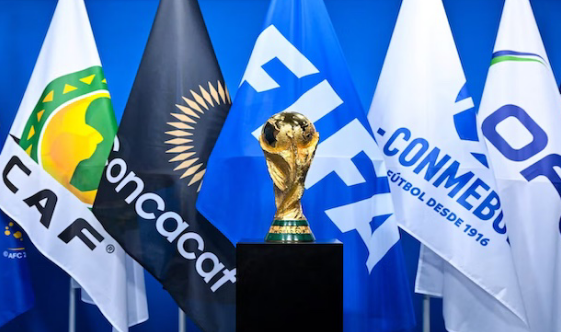
The Council of Europe has raised concerns over the governance and integrity of the 2026 FIFA World Cup, urging football’s world governing body to strengthen transparency and accountability measures ahead of the 2030 tournament.
In an open letter, Council of Europe Secretary General Alain Berset warned that recent developments in global football had increased concerns over the growing influence of money and power in the sport.
Berset said controversies surrounding decision-making processes had affected public confidence in football’s fairness, calling on FIFA to establish a stronger integrity framework to protect the credibility of future competitions.
He cited FIFA’s decision to overturn a one-match suspension imposed on United States forward Folarin Balogun as one of the issues raising questions about transparency.
The player was allowed to feature in the United States’ quarter-final clash against Belgium after reports of political pressure, although the hosts eventually lost 4-1.
According to Berset, the absence of a publicly disclosed explanation for the disciplinary decision created doubts about the independence of FIFA’s processes.
The former Swiss president also expressed concerns over FIFA’s commercial relationship with prediction market sponsor ADI Predictstreet, warning that betting on specific in-game events could increase the risk of manipulation and fraudulent activities.
He further highlighted other threats to football’s reputation, including racist abuse against players, increased criticism of refereeing decisions and the growing influence of gambling within the sport.
The Council of Europe, which entered into a cooperation agreement with FIFA in 2018 to promote human rights, transparency and accountability in football, called for immediate discussions on a comprehensive integrity plan before the 2030 World Cup.
The 2030 tournament will be hosted mainly by Spain, Portugal and Morocco, with opening matches scheduled in Argentina, Paraguay and Uruguay.
The European human rights organisation said stronger safeguards were necessary to ensure football remains fair, transparent and trusted by fans worldwide.