The United Nations has raised concerns over the growing sophistication of terrorist groups operating in northern Nigeria and the wider West Africa and Sahel region, warning that armed organisations are increasingly using drones, advanced communication systems and cryptocurrencies to strengthen their activities.
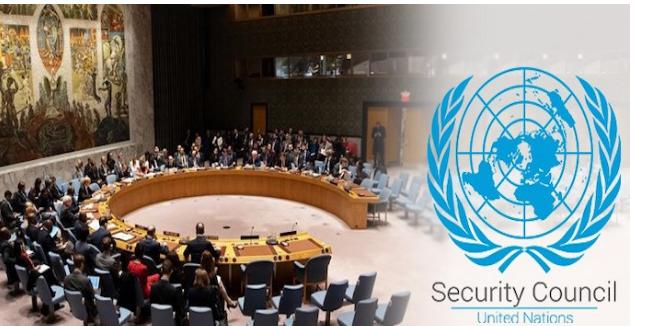
The warning was issued during a United Nations Security Council briefing by Leonardo Simão, Special Representative of the Secretary-General for West Africa and the Sahel and Head of the United Nations Office for West Africa and the Sahel (UNOWAS).
Presenting the latest UN report covering developments between November 2025 and June 2026, Simão said extremist groups were becoming more difficult to contain as they expanded their capabilities and strengthened cross-border operations.
He explained that terrorist organisations were increasingly linked with transnational organised crime, using illegal networks to gain territorial and economic influence while weakening public trust in government institutions.
The UN official said Nigeria, Niger and Burkina Faso remained among the countries suffering the most severe impacts, including terrorist attacks, kidnappings and widespread civilian casualties.
He disclosed that about 6.8 million people had been displaced across the region, while another 1.28 million had fled as refugees or asylum seekers due to insecurity.
Simão described the humanitarian situation as alarming, noting that limited access to affected communities and funding shortages were worsening the crisis, with women, children and young people bearing the greatest burden.
The warning comes shortly after the United States announced a major counterterrorism operation in Nigeria that reportedly led to the recovery of large quantities of equipment from jihadist groups for intelligence analysis.
Despite the security challenges, the UN highlighted progress in regional cooperation, including the reopening of the Kamba border crossing between Nigeria and Niger and continued efforts by the Cameroon-Nigeria Mixed Commission to implement the 2002 International Court of Justice boundary judgment.
Simão stressed that military action alone would not be enough to defeat terrorism, urging governments to address poverty, unemployment, weak governance and social vulnerabilities that contribute to violent extremism.
He noted that regional organisations, including the Economic Community of West African States (ECOWAS), were working to strengthen security cooperation, although financial constraints remained a major obstacle.
Members of the Security Council agreed that terrorism in West Africa and the Sahel has become increasingly connected to organised crime and illicit trafficking, requiring stronger cooperation among countries.
Several countries, including the United States, China, Russia, the United Kingdom and France, called for a broader approach combining security operations with investment in education, job creation, humanitarian support and economic development.
The council reaffirmed support for UNOWAS and preventive diplomacy as key tools in addressing both immediate security threats and the long-term challenges facing the region.