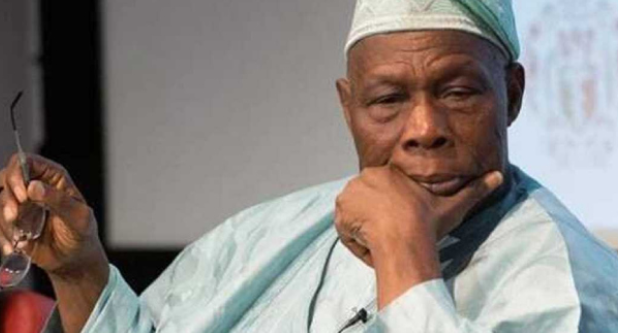
Former President Olusegun Obasanjo has rejected allegations by former Ogun State Governor, Aremo Olusegun Osoba, that he deceived leaders of the Alliance for Democracy (AD) during political negotiations ahead of the 2003 general elections.
Obasanjo, in a letter dated July 23, 2026, titled “Reply to Your Inaccurate Posture: ‘How Obasanjo Deceived Us in 2003’,” described Osoba’s claims as inaccurate, incomplete and based on misconceptions.
The former President insisted that he never misled or manipulated anyone, explaining that his political engagements at the time were based on consultations aimed at strengthening the success of the Peoples Democratic Party (PDP) and promoting national unity.
“I take strong and serious objection to your calling me a deceiver because I deceived nobody.
”I always presented my case and all issues as I had them and as I understood them, no matter whose ox is gored, ” he said.
Obasanjo said many of the political discussions that shaped his emergence as President in 1999 took place among senior leaders of Afenifere and the AD, and were not necessarily known to Osoba.
He recalled that shortly after his release from prison, several groups across Nigeria approached him to contest the presidency, including delegations led by Lawan Katsina, the late Chief S.M. Afolabi, and Chief Martins Kuye.
According to him, those engagements eventually influenced his decision to join the PDP after consultations with political leaders across the South-West, North and South-East.
The former President also addressed his relationship with the late Afenifere leader, Chief Abraham Adesanya, saying he maintained respect for the elder statesman despite political differences.
“There was no time I called on Papa Adesanya that I was not well entertained. Yet Papa stood on no vote for me, and I stood on my respect and what was due to him, ” he said.
Defending his decision to work with AD leaders after winning the 1999 presidential election, Obasanjo said the move was driven by a desire to create a broad national government rather than a sign of weakness.
“Bringing PDP and AD to join me for a sort of national government was not out of weakness; rather, it was out of strength and for the unity and progress of the country, ” he added.
Obasanjo also disputed Osoba’s account of the controversy surrounding the attempted removal of former Speaker of the House of Representatives, Ghali Na’Abba, claiming the move originated from within his administration.
He alleged that the then Vice-President supported the move while also pursuing his own presidential ambitions.
“The game continued to be played on with me treating it with contempt as I had committed no impeachable offence, ” he said.
On the outcome of the 2003 elections, Obasanjo rejected claims that the defeat of AD governors was caused by interference from the Presidency.
He argued that the election results reflected the political realities of the period, although he acknowledged that one state experienced a disputed outcome.
“Your loss or defeat in 2003 was genuine in all the six states except the one where the figures were successfully and murderously changed, ” he stated.
Obasanjo maintained that his political decisions during the period were guided by transparency, consultation and what he considered to be Nigeria’s broader national interest.