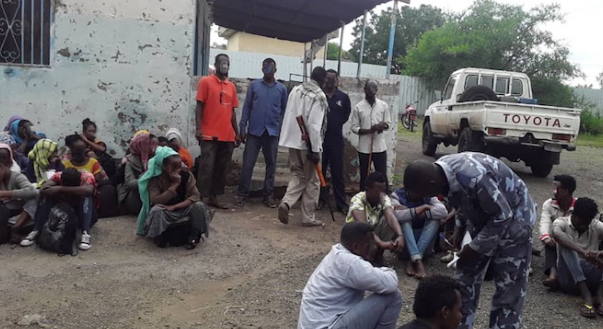
The Federal Government has announced a major shift in Nigeria’s anti-human trafficking strategy, declaring that the country must adapt to the growing use of digital platforms by criminal syndicates to recruit and exploit victims.
Attorney-General of the Federation and Minister of Justice, Lateef Fagbemi (SAN), said traffickers were increasingly abandoning traditional methods in favour of online recruitment, cyber-enabled forced criminality and transnational criminal networks, requiring stronger laws and closer collaboration among security agencies.
Represented by the Director of Research, Planning and Statistics in the ministry, Mrs Victoria Ojogbane, Fagbemi spoke on Thursday at the national commemoration of the 2026 World Day Against Trafficking in Persons in Abuja.
He said the Federal Government was strengthening Nigeria’s legal and institutional framework to confront emerging trafficking patterns linked to cybercrime, online scams and organised transnational crime.
“The changing dynamics of human trafficking require stronger laws, closer inter-agency collaboration and deeper international cooperation, ” he said.
According to the Attorney-General, the government will continue to support intelligence sharing, effective prosecution, improved protection for victims and stronger partnerships with neighbouring countries and development partners to dismantle trafficking syndicates.
Director-General of the National Agency for the Prohibition of Trafficking in Persons (NAPTIP), Binta Bello, warned that the internet had become one of the most powerful recruitment tools for traffickers.
She said criminal networks now exploit unemployment, poverty and the desire for better opportunities by using fake job offers, scholarships, business opportunities and migration promises to deceive young Nigerians.
Speaking on this year’s theme, “Trapped Behind the Scam,” Bello said governments, technology companies, financial institutions and civil society organisations must work together to combat increasingly sophisticated trafficking networks.
The United Nations Office on Drugs and Crime (UNODC) Country Representative, Cheikh Toure, said trafficking in persons was becoming closely linked with cybercrime, money laundering and financial fraud.
He explained that victims were often recruited through social media and online advertisements before being transported to scam centres where their passports are confiscated and they are forced to participate in online fraud.
“Victims are increasingly deceived through social media and online advertisements with promises of lucrative jobs or educational opportunities abroad before finding themselves trapped, ” he said.
Toure disclosed that UNODC research conducted across 21 Nigerian states revealed increasing use of digital platforms by traffickers, with fake employment and migration opportunities emerging as major recruitment tactics.
He also warned that Nigerians are increasingly being trafficked into overseas scam compounds, while similar forms of forced online criminality are beginning to emerge within the country.
To strengthen Nigeria’s response, UNODC announced the establishment of a joint Operational Task Force involving NAPTIP and the Nigeria Immigration Service under the European Union-funded PACTS Project.
The initiative will focus on intelligence gathering, preservation of digital evidence, financial investigations, tracing criminal proceeds and improving cross-border cooperation.
UNODC also unveiled a five-point support programme aimed at strengthening victim protection, intelligence-led investigations, regional collaboration, financial tracking of trafficking proceeds and preventive measures designed to reduce the vulnerability of young people to traffickers.
Participants at the event, including senior government officials, diplomats, security agencies, development partners and civil society groups, agreed that tackling modern human trafficking requires a coordinated approach that treats the crime as a complex security, justice and development challenge rather than solely a migration issue.