The Federal Government has dismissed reports of an immediate plan to remove electricity subsidies or increase tariffs, clarifying that its current focus is on improving power supply, expanding metering, strengthening transmission infrastructure and stabilising the national grid.
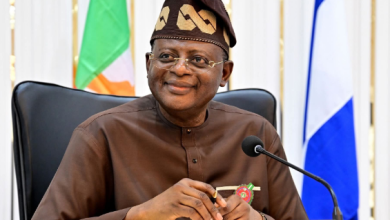
The clarification followed remarks by the Minister of Power, Joseph Tegbe, who initially stated that the administration planned to end the power subsidy regime by next year as part of measures to tackle the sector’s growing financial challenges.
Speaking at a national media roundtable in Lagos titled “Resetting Nigeria’s Power Sector,” Tegbe later explained that there was no policy currently before the government to raise electricity tariffs or move more consumers into higher tariff bands.
“Let me address two issues. The first is that, there’s no policy by this administration to increase electricity tariff beyond the current rate,” the minister said.
“If anybody is giving you information or telling you we want to increase tariff, put everybody in Band A, please, in the immediate term, nothing like that. And tell Nigerians, nothing like that. I’m making a categorical statement. There’s no plan to do that,” he added.
Tegbe said the government was instead working on a Power Sector Bond initiative aimed at clearing legacy debts owed to electricity generation companies and gas suppliers, noting that the sector currently carries about N3.3 trillion in outstanding obligations.
“We have the mandate of Mr President to clear the legacy debt and come up with sustainable structures to make sure this doesn’t pile up anymore,” he said.
The minister had earlier stated that the government hoped to end the subsidy system by next year, saying, “I promise you, next year, by God’s grace, we will put a stop to this so-called subsidy in the power sector.”
However, he clarified that such a move would not involve immediate tariff increases or subsidy removal for consumers.
Electricity subsidies have remained a major issue in the power sector, with government intervention preventing many consumers from paying full cost-reflective tariffs.
While Band A customers currently pay higher rates, consumers in Bands B, C, D and E continue to benefit from government support.
The minister said the administration’s new “Resetting the Sector” agenda was designed to make electricity a driver of economic growth rather than an obstacle.
“This conversation therefore marks the beginning of a new chapter of openness, accountability and collaboration. Above all, it marks the beginning of what we have appropriately termed ‘Resetting the Sector,’” he said.
According to Tegbe, the programme will focus on increasing electricity availability, improving grid reliability, creating a financially sustainable market and restoring investor confidence.
He credited President Bola Tinubu’s administration with deepening power sector reforms through the implementation of the Electricity Act, which allows states to establish their own electricity markets.
“Rather than viewing decentralisation as a threat, this administration has embraced it as an opportunity to unleash innovation, competition and investment across the federation,” he stated.
The minister assured vulnerable Nigerians that government would continue to explore measures to protect those unable to afford electricity costs.
“There are Nigerians that can’t afford to adequately pay for power. These are the vulnerable groups. We want to protect them,” he said.
As part of immediate interventions, Tegbe announced the launch of the Power Force initiative, which will engage 5,000 young Nigerians in nationwide meter installation efforts.
He also highlighted the Presidential Metering Initiative aimed at ending estimated billing and resolving challenges surrounding meter availability.
On electricity generation, the minister said the country had recorded improved output, with generation averaging 5,000 megawatts over the past two weeks.
“We are already witnessing encouraging improvements in electricity generation. Over the course of the last two weeks, we have consistently generated 5000MW,” he said.
He added that Nigerians were currently experiencing up to 16 hours of electricity supply daily, expressing optimism that longer supply hours could be achieved in coming years.
“Someday, in the next 2-3 years, we might have lights for 24 hours or 22 hours. God’s willing,” Tegbe said.
The ministry’s transformation plan includes a technical audit of the national transmission network, harmonisation of federal and state electricity regulations, and a Grid Stabilisation Programme targeting major corridors including Lagos, Enugu–Port Harcourt and Abuja–Kaduna–Kano.
The government is also pursuing sector liquidity reforms, loss reduction measures, transmission expansion and strategic asset management through the proposed Generating Asset Management Company (GAMCO) and Renewable Assets Management Company (RAMCO).
Explaining the initiative, Tegbe said the assets would be used to attract long-term financing because they generate stable cash flows.
“What we plan to do in that space, which is called GAMCo, is to put assets together and using those assets to raise funds based on their balance sheet. And if we’re able to do that, we’re doing the same thing in RAMCo,” he said.
The minister stressed that the success of the sector reset would depend on implementation rather than promises.
“Our mission is very clear.
”Reliable electricity that powers our homes, competitive electricity that powers our industries, sustainable electricity that attracts investment and inclusive electricity that reaches every Nigerian,” he said.
Tegbe added that about seven million electricity meters would be deployed over the next three years, beginning with 1.55 million within six months.
He also warned that political considerations would no longer determine the installation of electricity equipment, particularly transformers, saying infrastructure deployment would be based on actual demand.
The minister assured Nigerians that noticeable improvements in electricity supply would be achieved within six months.