Nigeria’s position in the global liquefied natural gas (LNG) market is under growing threat as the country’s share has declined from six per cent to five per cent, with further losses possible if urgent measures are not taken to address gas supply challenges and expand processing capacity.
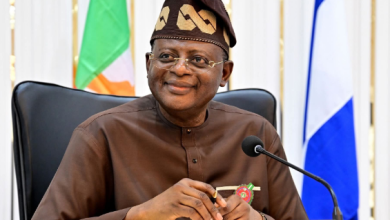
The warning was issued by the Managing Director and Chief Executive Officer of Nigeria LNG Limited (NLNG), Mr Adeleye Falade, during the company’s Facts & Figures Presentation in Lagos, where he highlighted the need for urgent investment to protect Nigeria’s place in the fast-changing global gas industry.
Falade said Nigeria’s declining market share was a result of slow growth in LNG capacity compared with competing gas-producing nations that have moved faster to convert their reserves into export opportunities.
“About three to four years ago, NLNG held six per cent of global LNG market share. Eventually, we’re down to five per cent.
”There are other countries that are growing. If we don’t do anything, we’ll go down to three per cent. We’ll go down to two per cent.
“But that’s not our dream. Our dream is that we’ll continue to stay relevant even in the global space,” he said.
Falade said the situation was particularly concerning given Nigeria’s enormous gas resources.
The country currently has about 215.19 trillion cubic feet (TCF) of proven gas reserves, with an additional estimated 600 TCF yet to be proven, according to figures from the Nigerian Upstream Petroleum Regulatory Commission (NUPRC).
However, Nigeria’s LNG processing capacity remained limited at about 22 million tonnes per annum (MTPA) through NLNG’s six-train facility on Bonny Island.
Comparing Nigeria’s performance with other leading LNG producers, Falade noted that countries with smaller gas reserves have developed significantly higher processing capacities.
“Australia had a proven reserve of about 120 TCF but has a processing capacity of about 88 MTPA,” he said.
He added that Malaysia, despite having only about 97 TCF of gas reserves, also has a processing capacity exceeding Nigeria’s.
“But then you look at us (Nigeria), 209 TCF and just 22 MTPA. So at that point in time, it became obvious to us that we needed to be more ambitious about our growth,” Falade said.
The NLNG chief executive warned that failure to expand capacity could cost Nigeria billions of dollars in lost export earnings, foreign direct investment and strategic influence at a time when global demand for natural gas remains strong.
He said the global shift away from more polluting energy sources had created a valuable but limited opportunity for gas-producing countries to maximise their resources.
“While the world has moved away from sources of energy that are very dirty… gas will still be dominant in the energy mix, not just for today, not just in 10, 20, 30, up to the next 40, 50 years. But we can’t assume that window will be open for a long period of time,” he stated.
According to Falade, natural gas opportunities now extend beyond electricity generation to industries such as fertiliser production, petrochemicals, cosmetics and transportation through initiatives like compressed natural gas (CNG).
“What all of that is doing is allowing us to be able to maximise that potential that God has given us as a country,” he said.
To prevent further decline, NLNG said it was pushing ahead with expansion plans, including the development of Train 7, which is expected to increase Nigeria’s LNG capacity by about 35 per cent, from 22 MTPA to 30 MTPA.
The company has also started preliminary discussions around future projects involving Trains 8, 9 and 10 as part of its long-term growth strategy.
“That ambition is why Train 7 is underway, and why NLNG has begun exploratory work on Trains 8, 9 and 10.
”Still very much at the embryonic stage, but it’s one that is already having conversations around… So we do have a growth agenda,” Falade said.
He stressed that expanding capacity was essential if Nigeria was to remain competitive and attract long-term international investment.
Despite the expansion plans, Falade identified inadequate gas supply as the biggest challenge facing NLNG’s growth ambitions.
He explained that with traditional suppliers, including Shell and Eni, reducing their involvement in onshore assets, NLNG has had to diversify its gas supply sources.
“I think today, we have close to 70-75 per cent of our gas supply that is now coming from outside of the affiliates of our shareholders,” he said.
The company recently signed Gas Supply Agreements (GSAs) with six third-party suppliers and is targeting contracts covering between 110 and 150 per cent of its plant gas requirement to provide protection against supply disruptions.
Falade explained that securing reliable gas supply was a key condition for future investments.
“Train 7 came with dedicated gas supply opportunities that were identified upstream. In fact, it’s a conditional precedent.
”If you don’t have line-of-sight to gas, you won’t take final investment decisions,” he said.
He warned that persistent supply shortages could force NLNG to consider a more vertically integrated approach similar to the strategy adopted by the Dangote Refinery.
“We’re not yet at that stage, but it’s also an option that is on the table,” he said.
Falade said Nigeria must accelerate upstream gas development, improve infrastructure and unlock stranded gas resources if it hopes to compete with major LNG exporters such as Qatar, the United States and Australia.
He noted that much of Nigeria’s gas reserves remain inaccessible because of inadequate pipelines and processing facilities.
He also stressed the need to complete technical and commercial preparations for future LNG trains to ensure the country moves quickly from planning to execution before global competition intensifies.
On the company’s operational challenges, Falade confirmed that the Force Majeure declared on NLNG’s Bonny Island facility in October 2022 remains in place due to the impact of widespread flooding that disrupted gas supplies.
“It’s still in place. In order for you to move out of it, you must do it in a way that is sustainable and shows that you can actually exit it. But as of today, we’re still in Force Majeure,” he said.
Falade said the message to government, investors and Nigerians was straightforward: the country must urgently unlock its gas potential or risk losing valuable opportunities to faster-moving competitors.
“We have to unleash our gas potential as a company, but also as a country. People talk about us and what we have been doing and we acknowledge it, but we think that journey has just started,” he stated.
He added that NLNG remained committed to supporting government revenue and Nigeria’s economic development, but warned that sustaining that contribution would depend on the country’s ability to expand production and processing capacity.
With the global energy transition gathering pace, NLNG said the next two to three years would be critical in determining whether Nigeria strengthens its position as a leading LNG exporter or loses ground to countries better positioned to capture emerging market opportunities.