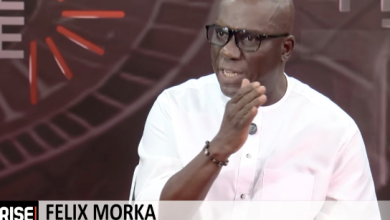
The Minister of the Federal Capital Territory (FCT), Nyesom Wike, has questioned the basis of the Catholic Bishops’ concerns over the neutrality of the Independent National Electoral Commission (INEC) ahead of the 2027 general elections.
Wike, speaking during a media briefing on Tuesday in Abuja, urged the clerics to provide evidence to support their concerns, saying statements from respected institutions could influence public perception and must be backed by facts.
“How did the Catholic Bishops come to the conclusion that INEC is biased? What are your facts? What happened for you to prove?” Wike asked.
The minister said any allegation against the electoral umpire was a serious matter, especially when coming from an influential organisation like the Catholic Bishops’ Conference of Nigeria (CBCN).
He warned that declaring INEC biased without specific examples could create unnecessary doubts among citizens.
“When you come to the public to make that kind of accusation that the electoral umpire is biased, you must have your facts: ‘This is why we say they are biased. Look at this, look at that,’” Wike said.
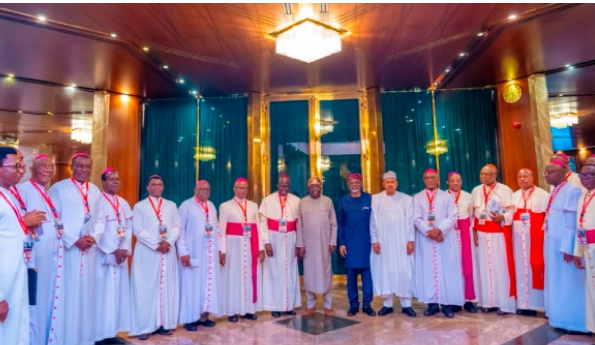
The controversy followed a meeting between President Bola Tinubu and the leadership of the Catholic Bishops’ Conference of Nigeria at the Presidential Villa in Abuja.
During the visit, the bishops called for credible elections in 2027 and urged the government to strengthen democratic institutions ahead of the polls.
Their comments came amid concerns from opposition parties that some government institutions, including the electoral commission, could be used to undermine political opponents.
Responding to the concerns, President Tinubu defended INEC, insisting that the commission remains independent and neutral.
“INEC, you mentioned, is neutral. They’ve never, never intimidated anybody,” Tinubu said.
The President added that political contests would remain competitive but rejected claims that state institutions were being used against opponents.
The issue gained further attention after former Archbishop of Abuja, Cardinal John Onaiyekan, said President Tinubu was unhappy with the bishops’ message during their meeting.
Onaiyekan had stated that the bishops highlighted Nigerians’ economic challenges and expressed concerns that the country was struggling.
The comment attracted criticism from the presidency, with Tinubu’s spokesperson, Daniel Bwala, accusing the cleric of making political statements.
Bwala also claimed that Onaiyekan’s position did not represent the views of all Christians in Nigeria.
Wike echoed the criticism, alleging that Onaiyekan’s political preference was already known.
“I’m aware of Cardinal Onaiyekan’s position. It’s not hidden who he supports. Everybody knows that,” Wike said.
The exchanges have intensified discussions around electoral credibility, institutional neutrality and the role of religious leaders as Nigeria approaches the 2027 elections.