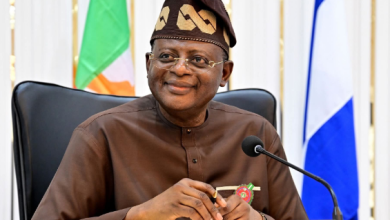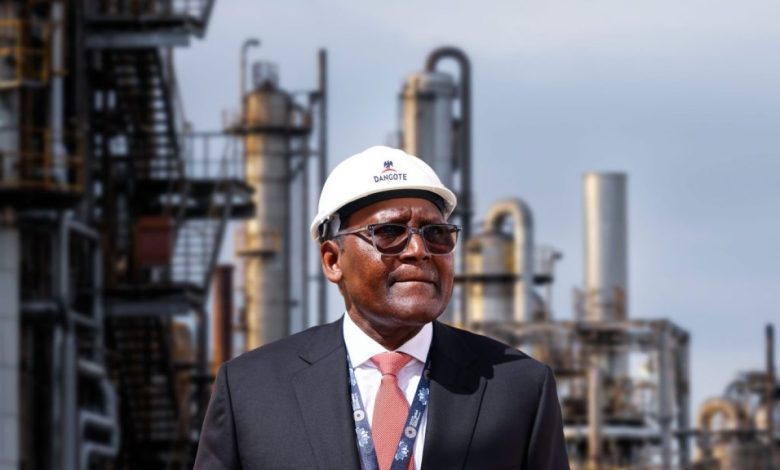
The Director General of the Manufacturers’ Association of Nigeria (MAN), Segun Ajayi-Kadir, has praised the Dangote Refinery’s initiative to distribute fuel for free, saying it will benefit manufacturers by eliminating profiteering middlemen and transporters.
Ajayi-Kadir stated this in an
exclusive interview with Channels Television.
Ajayi-Kadir, believed the private sector is key to Nigeria’s economic success and that the government should focus on creating an enabling environment.
He also believed that the free fuel distribution moves by the $20bn Dangote Refinery would remove profiteering middlemen and transporters who dig holes in the pocket of manufacturers.
He also believed that the success of the private refinery so far showed that the government has no business in the business of fuel refining and should sell off the four national refineries for national energy security.
Here are some of his responses during the interview:
How impactful is the removal of the fuel subsidy, and what do you think about the Dangote Refinery and other players in the sector?
If we didn’t stop subsidy, the subsidy would stop us or kill us. The removal was the best thing for the country to do at that time. And we have since moved on, but the immediate impact has been devastating for the manufacturing sector.
The removal of the subsidy increased logistics costs, increased inflation, and so on. But you see, one very good thing that the administration has done is the fact that after the removal of the fuel subsidy, there have been several reforms that have given respite in that sector.
To the second question: the Dangote phenomenon. What this has done is to draw attention that private sector investment is key and that the government has no business in doing business.
It shows that the government should just create an enabling environment and allow the private sector to thrive.
With the coming of Dangote, we have seen that we have resumed as net exporters of petroleum products. But before it came, we were importing fuel, which has been seen as a tragedy for Nigeria. We are producing crude, but we have to export it and subject ourselves to all the shocks in the international environment.
With the war in the Middle East, by now, we would have been talking of the price of a litre of petrol being more than N1,200, N1,300, or N1,400. But what we are seeing is that it is tumbling down. And that’s the power that the private sector brings into the equation.
The fact that you can now eliminate the cost of distribution, which has been a major issue. The middlemen were just milking Nigerians and making it impossible for them to reach far-flung places.
But when a company can absorb N1 trillion in terms of distribution costs across the country and can ensure that we have an efficient, effective, and reliable supply across the country, you must just applaud this.
As it is now, we are likely to continue to pay less for fuel, while internationally, the price of petroleum products is going up. And that is the only way you can insulate the economy, create energy resilience, and ensure that we bring down the cost of production.
Last year, for instance, our manufacturers had N2 trillion on unsold inventory, and spent ₦N1 trillion on alternative sources, largely diesel. But now, the prices are tumbling down, and it’s going to reach places that hitherto have had to suffer a lot from a lack of electricity supply.
Some think this is about monopoly and think the jobs of other companies are being taken.
I think people condemn monopoly because it does not allow for competition, it does not allow for efficiency, and it does not allow for value to the average citizen.
But for the Dangote Refinery, it’s not a monopoly. We have other players in the sector. If they are not playing well, if they are inefficient, if they are comatose, you wouldn’t blame a player. But in this case, we are having a positive benefit from a player. There are other refineries, but they have not gone the whole hog.
And those who play in the movement of the products, what have they delivered? Long queues, unavailability, closure of many filling stations across the country, price unpredictability, and complete lack of energy sufficiency across the country.
I do not call this a monopoly. You cannot blame anyone for producing and ensuring effective delivery.
Dangote Refinery is to begin the free distribution of fuel across the country from mid-August. What do you see happening in the long run?
If I may use what Gen Z calls ‘Joy is coming’. That’s what I see in the long term; it’s going to be better.
I see the fuel price coming down to N800. And that’s what manufacturers want. I just said last year–we spent as much as N1.1 trillion to provide alternative power.
So, shortly, I see a continued reduction in the price of diesel. I also see a situation where other players will be encouraged to come into the field.
I don’t think that we should use sentiments to dissuade any investor from improving the lives and well-being of the people.
You can imagine how many small and medium-scale enterprises have had to shut down because they do not have access to electricity. Three to four outages a day are not good for production.
But if you can have an adequate of supply of diesel and even compressed natural gas across the country, this will boost production. 40% of our cost of production is on energy. So,
I believe that with the free distribution plan by the Dangote Refinery, better days are coming. We should continue to encourage more of Dangotes and for the government to incentivise Dangote so that we can completely crash the price.
Nigeria has no business suffering energy poverty, and we should just move on and run a country that works.
Nigeria has four refineries, and there are now controversies about their functionality. What is going on?
Honestly, the government should just sell these refineries. Give them to private sector persons who will run them efficiently and who will be able to deliver.
When something belongs to everybody, it belongs to nobody. We have too many resilient, hard-working Nigerians who are ready to make good use of private business. I think the government should partner with those people to run the economy.
Those four refineries we are talking about are a pure drain on the Nigerian economy. And it is not fair to the Nigerian people.
What is one thing that you think this government should do to help productivity and make the lives of manufacturers better?
I think the government should completely privatise all the other refineries. This will ensure that the Naira-for-Crude policy is sustainable and adequately funded, and supported.
We should ensure that, in terms of electricity supply, we do something about the incompetent distribution companies that we have and ensure that we can drive investment into the sector to guarantee supply.
We should also ensure that we are tackling security because it’s becoming a disincentive for investment.
Sixty per cent of our members in the Northeast have closed shops, but I believe that with increased security, we’ll be able to put life into all these areas.
The removal of fuel subsidy has had a devastating impact on the manufacturing sector, increasing logistics costs and inflation.
However, MAN Director General Segun Ajayi-Kadir believes the removal was necessary, stating, “If we didn’t stop subsidy, the subsidy would stop us or kill us.”
Channels tv