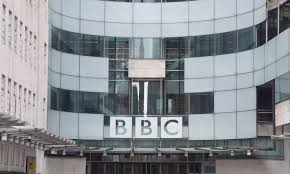
The British Broadcasting Corporation (BBC) is set to eliminate up to 2,000 jobs in what would become its largest workforce reduction in 15 years, as the public service broadcaster moves to address rising financial pressures and structural changes in the media industry.
Staff were briefed on the planned redundancies during an all-staff meeting on Wednesday afternoon, with reports indicating that the cuts will affect roughly 10 per cent of the organisation’s 21,500 employees.
The development was first reported by the Guardian UK.
The restructuring comes ahead of the arrival of former Google executive Matt Brittin, who is expected to assume the role of director general next month. The scale of the proposed job losses is the largest since 2011.
Earlier in the year, the corporation announced a £600 million cost-cutting programme, aimed at reducing its overall expenditure by about 10 percent of its £6 billion annual cost base over a three-year period.
The plan includes staff reductions and the cancellation of some programming.
Former director general Tim Davie, who stepped down on April 2 after announcing his resignation in November, had warned of the need for deep financial adjustments amid controversies surrounding editorial coverage and broader operational pressures.
In an internal email following the staff briefing, interim director general Rhodri Talfan Davies said the organisation was facing widening financial strain driven by inflation, declining income, and global economic uncertainty.
He explained that the BBC must find an additional £500 million in savings from its £5 billion annual operating costs over the next two years, with most reductions expected to take effect in the 2027–28 financial year.
“Put simply, the gap between our costs and our income is growing,” he said, pointing to high production costs, pressure on licence fee revenue, and weakening commercial returns.
Davies added that job reductions were unavoidable, estimating that between 1,800 and 2,000 positions could be affected.
He noted that while details were still being finalised, the corporation was already preparing staff for significant disruption.
The interim director general also outlined immediate austerity measures, including tighter controls on recruitment and travel, reduced spending on consultants, and cuts to conferences, awards, and related activities.
BBC divisions have been instructed to review overlapping functions and consider scaling back or discontinuing certain activities.
Detailed spending plans for the 2027–28 financial year are expected to be shared later in the year.
The broadcaster is also engaged in negotiations with the UK government over the renewal of its royal charter, which determines its long-term funding framework, including the licence fee model.
Trade union leaders have expressed concern over the scale of the cuts. Head of Bectu, Philippa Childs, warned that the redundancies could severely weaken the organisation’s public service mandate, urging the government to secure more stable funding arrangements.
The BBC recently increased its licence fee in line with inflation, but has faced declining household subscriptions amid growing competition from streaming platforms such as Netflix and Disney+, as well as increasing licence fee evasion.
Despite expanding its digital offerings, including growth plans for iPlayer and new partnerships with platforms like YouTube, the broadcaster continues to grapple with what regulators have described as long-term structural challenges facing traditional public service media.