Rising geopolitical tensions in the Middle East, fuelled by the United States-Israel confrontation with Iran, have reportedly removed about 10 million barrels of crude oil per day from global supply, creating a significant gap in the international energy market.
Amid the disruption, Africa led by Nigeria is increasingly being viewed as a key region capable of helping to stabilise global oil supply.
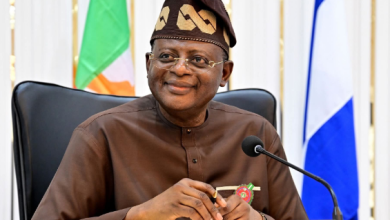
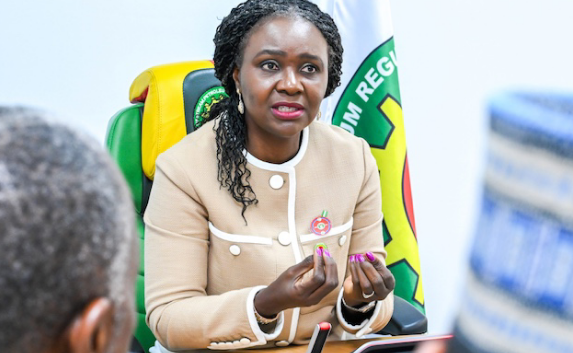
The Chief Executive Officer of the Nigerian Upstream Petroleum Regulatory Commission (NUPRC), Mrs. Oritsemeyiwa Eyesan, made this assertion at the Africa Energy Forum held during the Offshore Technology Conference (OTC) in Houston, Texas, United States.
She said Africa has become central to global energy conversations due to its vast reserves, estimated at 125 billion barrels of crude oil and 625 trillion cubic feet of natural gas, about 10 per cent of global totals.
According to her, declining output from traditional production regions has strengthened Africa’s position as the most promising alternative supply base.
“Today, we believe that about 10 million barrels have been taken off the market in a situation where you had a slight oversupply at one time. With 10 million off the market, there’s a huge deficit.
”The question on everybody’s lips is where this deficit will come from. Or rather, who will fill the gap?
“Let’s x-ray the North Sea. The North Sea was prolific in the past but is declining. North America, same story. And if you layer Asia on that, it’s all decline.
”However, the only continent that is showing promise today is no other than Africa,” she said.
Eyesan pointed to recent oil and gas discoveries across Africa, naming Ghana, Mozambique, Tanzania, Senegal, and Namibia as examples of emerging production hubs.
However, she stressed that the major challenge was not resource availability but converting reserves into productive output.
For Nigeria, she said progress has been driven by reforms under the Petroleum Industry Act (PIA), enacted in 2021, which has reshaped the upstream, midstream, and downstream sectors.
“Nigeria has experienced a rebirth since 2021 and the rebirth was instrumental to the change and the opportunities that Nigeria has today.
“The PIA has provided fiscal clarity, regulatory efficiency, contract certainty, and transparency across the upstream, midstream, and downstream segments.
“The only way Africa, sitting on huge resources, can bridge that gap successfully is if we have the right regulatory systems to support the business terrain. And Nigeria is not alone in that march,” she said.
She noted that investment trends in Nigeria’s oil and gas sector have improved compared to the period before the PIA, when capital inflows dropped sharply.
“About 15 years before the PIA, we were comfortably spending $15 billion annually on the upstream business.
”This declined to less than $7 billion at some point. Today, we see an upswing,” she stated.
According to her, several major Final Investment Decisions (FIDs) have either been secured or are nearing approval, including the Shell Bonga project, Ubeita Non-Associated Gas project, HI Gas project, and the Zabazaba-Etan field, which is expected to attract about $10.38 billion in investment.
“These are huge projects and a signal that the tide has turned,” she said.
She added that in 2024 alone, the commission approved 48 Field Development Plans, describing it as a major indicator of industry recovery.
Eyesan also disclosed that 50 oil blocks are currently being offered in an ongoing licensing round involving about 300 competing companies, expected to conclude by the third quarter of 2026. A new bid round, she added, will begin before the end of 2025.
To support exploration and investment decisions, she said the commission is expanding its National Data Repository with advanced 2D and 3D seismic data through partnerships, alongside the adoption of artificial intelligence to improve analysis and speed up decision-making.
She further emphasised that Africa’s challenge lies more in infrastructure and financing than in resource availability, noting that the continent suffered underinvestment during global energy transition debates.
Eyesan urged investors to take advantage of opportunities in Africa’s oil and gas sector, assuring them of strong returns.
She maintained that Nigeria’s reforms under the PIA demonstrate what is possible when regulatory clarity and investor confidence align, describing the continent’s energy future as highly promising if supported by sustained investment.