Nigeria could be losing up to N20 trillion every year through systemic leakages in public revenue management, according to a new policy document by Olisa Agbakoba Legal (OAL), which is calling for sweeping constitutional reforms to strengthen fiscal accountability.
The report, presented in Lagos, argued that the country’s persistent economic strain is largely linked to weak enforcement of Section 162(1) of the 1999 Constitution, which requires all federally collected revenues to be paid into the Federation Account.
Titled “The Federation Account of Nigeria and Infinite Possibilities: A Framework for Full Remittance and Fiscal Accountability,” the paper describes Nigeria’s fiscal situation as a “revenue paradox,” where rising government income has not led to improved financial stability.
It noted that federation revenues rose from N16.8 trillion in 2023 to N31.9 trillion in 2024 and are expected to keep increasing.
However, this growth has coincided with worsening debt levels.
According to the report, Nigeria’s total public debt reached N159.27 trillion by the end of 2025.
The document also revealed that debt servicing consumed 78 per cent of federal revenue in 2023 and 69 per cent in 2024 far above the 30 to 40 per cent benchmark considered sustainable for developing economies.
It blamed the situation not on low earnings, but on what it called “structural leakage,” where a large portion of government revenue never reaches the Federation Account.
Citing the World Bank’s 2025 Nigeria Development Update, the report said over 39 per cent of gross federation revenue estimated at more than N14 trillion was deducted before remittance in 2025 alone.
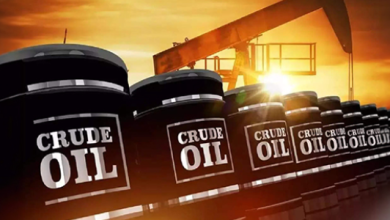
A major concern highlighted was the role of the Nigerian National Petroleum Company Limited (NNPC Limited), which the report accused of contributing significantly to revenue shortfalls through under-remittance and lack of transparency.
It stated that in 2024, the company remitted about N600 billion out of N1.1 trillion due, retaining the balance to settle legacy obligations.
The paper also criticised the structure of NNPC Limited, noting that it simultaneously serves as producer, seller, cost manager, and remitter of oil revenues.
It said this creates a conflict of interest that weakens accountability, and recommended splitting these functions into separate independent bodies.
Another issue raised was the use of crude-backed loan arrangements.
The report disclosed that about 213,000 barrels of oil per day have been committed to debt repayment under various financing deals, including the $3.3 billion Project Gazelle facility with Afreximbank, as well as Project Yield, Eagle Export Funding, and Project Leopard.
It warned that several of these arrangements may have bypassed the National Assembly and reduce funds available for the Federation Account, effectively allowing deductions before official remittance.
While acknowledging the Federal Government’s Executive Order No. 9 issued in February 2026, which halted some pre-remittance deductions under the Petroleum Industry Act, the report said the measure was only a partial fix and could be reversed.
The document also questioned the legal standing of the Treasury Single Account (TSA), describing it as an executive policy without constitutional backing, and argued that it cannot replace the Federation Account structure under Section 162.
To address the challenges, OAL proposed a constitutional amendment mandating that all revenues be remitted in gross form, with no prior deductions.
It argued that administrative costs should only be withdrawn after full remittance and proper legislative approval.
The report estimated that adopting a “gross remittance” system could increase distributable revenue by N15 trillion to N20 trillion annually, reduce borrowing, and improve transparency.
It further urged that reforms to the Federation Account be made a major issue in the 2027 elections, warning that Nigeria’s debt-to-GDP ratio could rise to 33.1 per cent by then.
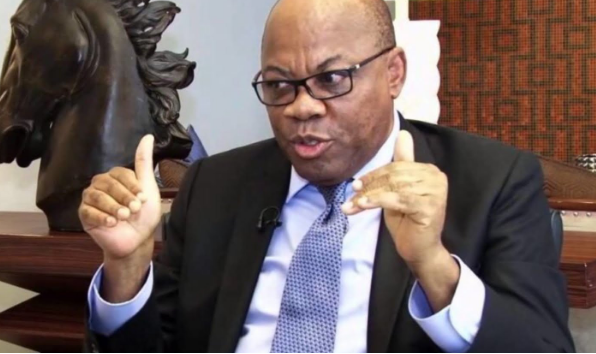
Founder Olisa Agbakoba said Nigeria’s core problem is not revenue generation but weak systems that prevent full remittance and accountability.
He also criticised what he described as poor constitutional understanding among many political leaders, saying governance is often undermined by ignorance of basic legal provisions.
Agbakoba argued that many politicians focus more on elections than governance, with public attention centred on political contests rather than policy knowledge.
Looking ahead to 2027, he said constitutional literacy should be a key requirement for leadership, insisting that candidates should be tested on their understanding of key provisions such as Section 162.
He urged Nigerians and the media to scrutinise aspirants more rigorously, warning that many would struggle to explain basic constitutional issues if properly questioned.
According to him, weak understanding of the Constitution has contributed to poor resource management and low accountability across government.
He concluded that unless governance is anchored on stronger constitutional knowledge and financial transparency, policy reforms would continue to fall short of expectations.