From Newsroom to Novel: DISTORTION Series Take Centre Stage at PEN Nigeria’s World Press Freedom Day

It was an atmosphere of calmness and eager anticipation that Sunday evening, as literary creatives joined the global community to mark World Press Freedom Day, observed by the United Nations to draw society’s attention to the need for freedom of expression.
As part of efforts to promote this unique day, creatives, writers, and communication practitioners gathered to rekindle their passion and reignite conversations around their common unifying factor, the power of writing and the love for words.
This truly came alive as PEN Nigeria featured the Distortion Series in commemoration of World Press Freedom Day 2026 to enlighten writers on the correlation between press freedom and literary expression.
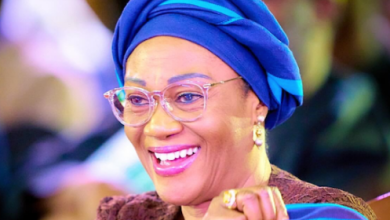
The conversation began with formal greetings led by the President of PEN Nigeria, Mrs. Oluwatoyin Adenubi, who proceeded with a punchy introduction of the guest speaker, the acclaimed author of the Distortion Series, Lady Ejiro Umukoro who is a Recipient of the United States Agency for Global Media ChangeMaker Awardee, is the Founder of LightRay! Media, a multi-award-winning investigative Storyteller, Communications Specialist, Gender Advocate, and celebrated Griot, Lady Ejiro Umukoro, who was invited to drive the conversation.
With vibrancy and passion, the guest speaker spoke extensively from her wealth of experience as the #QueenMotherOfLiterature, a title she truly embodies, enlightening her audience on the connection and distinctions between press freedom and literary expression.
This will be the second time, Lady Ejiro Umukoro’s novel, the DISTORTION series is selected as the The Book of Discussion on World Press Freedom Day.
In 2025, The United States Agency for Global selected her novel on World Press Freedom Day.
“Press freedom and literary expression are two lungs breathing the same air,” she emphasised, while describing how journalism and creative writing are both forms of freedom of expression.
“In journalism, we speak to facts, evidence, and data that have been proven, verified, published and distributed for public interest while creative writing can take the form of prose, creative imagination, or poetry to tell humanized stories,” she said, buttressing her point with reference to Things Fall Apart by Chinua Achebe, which she described as a powerful example of creative writing compared that dismantle imperialism in a manner no UN reports could have achieved during that period.
Speaking on creative writing and literature, she reiterated how “literature does not just speak, but humanises and dramatises characters,” while referencing The Gods Are Not to Blame by Ola Rotimi.
She explained how the play addressed themes such as feminism, patriarchal control over women’s agency about virginity and the far reaching effects of female genital mutilation, adding that “no newspaper headline can be as emotional or as transformative as Ola Rotimi’s The Gods Are Not to Blame in dismantling and questioning age long held norms, culture and traditions.”
Speaking further, she reflected on how poetry served as a tool in certain eras in Russia and more recently in Afghanistan where poetry was used as tool to encode information when the media was censored.
Stressing again that, “Journalism, creative writing, press freedom, and creative expression are two lungs breathing the same air,” Umukoro noted.
“The moment you gag the media, it is not too long before literature is gagged. Do not allow your freedom of expression to be silenced.”
She further quoted Article 19 of the Universal Declaration of Human Rights, which states that everyone has the right to freedom of expression through any media.”
Emphasising the difference between journalism and creative writing, she explained that journalism is rooted in facts that have been proven, refined, published, and distributed.
“Your ability to express your voice is freedom of expression. When you gag people, you stifle civilization and progress because the foundation of every advanced civilization is the right to freedom of expression, which leads to innovation, creativity, and the full expression of human capacity to provide solutions,” she emphasised.
She further opined that facts, places, characters, and the realities of who did what and why are what make up journalism, reiterating that “Journalism is for public interest, while literature is for public morality.”
She noted that if facts are embedded in journalism, there remains the possibility of exposing them through literary forms.
According to her, information embedded in stories can never truly be buried because “With literature, you can humanize or fictionalize characters, create pseudonyms, and adapt realities.”
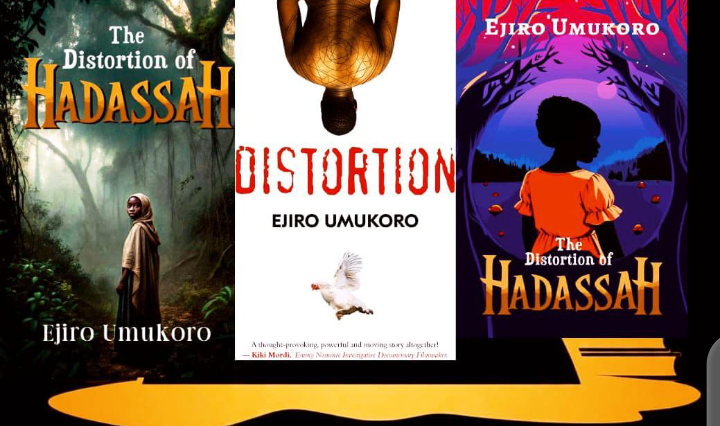
She explained how this technique was employed in the Distortion Series, a distinguished literary work infused with journalistic skill sets.
This fusion enabled platforms like BusinessDay to amplify the work, using journalism and creative writing together to captivate readers through themes of gender-based violence, human rights abuses, identity, and domestic violence.
She further revealed how the character “Nkem” in the Distortion Series was inspired by a real person she met in Porto-Novo.
She explained how the woman escaped the generational curse of the Osu caste system prevalent in Eastern Nigeria.
Lady Ejiro also recounted how an eight-month media advocacy tour for her book #Distortion included appearances on platforms such as Arise News, attracting over 55,000 views.
During another live broadcast early 2025, callers on a Lagos-based radio program Voice of the People, reportedly attested to the reality of the Osu caste system.
Lady Ejiro’s advocacy on issue, yield great result with the abolishment of the Osu cast system in Oguta Local Government Area in Imo State in November 2025.
She emphasised the power of literature as a tool for advocacy because, while news headlines may fade with time, literary stories endure.
Explaining The Distortion of Hadassah, she identified how identity crises of minors in Nigeria continue to take root within cultural and religious spaces, highlighting abusive societal structures and dysfunctional relationships between citizens and the state, as well as between children and parents.
She noted that the novel’s themes of surrogacy, witchcraft, adoption, and social justice earned it recognition for young African writers.
She also stressed that advocacy through literature contributed to the abolition of the Osu caste system in the Oguta community in Imo State because “literature never dies.”
A reading session followed as excerpts from #Distortion and The Distortion of Hadassah thrilled listeners, many of whom were delighted to hear that the Osu caste system had been abolished.
Some participants also lamented how the phenomenon had destroyed relationships that could have led to successful marriages.
A question-and-answer session followed, as engrossed listeners eagerly sought to understand the inspiration behind the book.
The guest speaker, in responding to a series of questions on the Osu/Ohu anomaly, understanding the emotions of her audience, reiterated that the Osu caste narrative was inspired by the true-life story of a woman who fled to Porto-Novo from eastern Nigeria to conceal her identity.
She explained how the legacy of the transatlantic slave trade and the dedication of children to deities contributed to the misinterpretations that later evolved into the Osu caste system.
Similarly, she revealed that the character Abu the pharmacist was also based on real-life experiences during the COVID-19 era, serving as an eye-opener to parents who often send their daughters to purchase drugs, while exposing issues within the pharmaceutical industry, including fake drugs and regulatory concerns involving NAFDAC.
Another participant asked the “Queen Mother of Literature” whether she faced pushback for addressing such sensitive issues. She responded that some Igbo individuals were displeased that she was revisiting topics they preferred to remain buried.
She further clarified how her investigative journalism exposed a case involving a 55-year-old man who repeatedly assaulted his daughters, aged 16 and 14, over a five-year period, highlighting the growing incidents of incestuously abuses by fathers and older ‘Uncles’.
The perpetrator reportedly justified his actions by claiming he had lost his wife. Lady Ejiro used this example to advocate against the normalisation of sexual abuse and the grooming of young boys into harmful behaviors as there is a growing Boy-Man crisis across the country.
In advising young minds on how to remain expressive and unrestrained, Lady Ejiro urged them to recognize their humanity and their right to freedom of expression.
“As human beings, our duty is not to hurt or harm, but to reveal hurt, speak truth to power, and use writing as a God-given gift to address social issues.
It is our constitutional and social right as people living within a state to hold one another accountable.
Without accountability, we’ll be living in a beastly society. Writing makes us aware of our emotions and realities,” she affirmed.
She further encouraged young writers to document their own time in history through writing, stating that “history is your capacity to document incidents as they happen.
”You have a unique story to tell, and future generations will need references to understand how things once were.”
She also clarified that information buried within books can always be rediscovered and transformed into meaningful stories.
The final question came from Mr. Adebayo Samuel, who sought clarification on the origins of the caste system.
He was made to understand how centuries of castigation and banishment rooted in the transatlantic slave trade eventually evolved into stereotypes surrounding individuals dedicated to deities.
A book-reading session followed, during which young writers presented their works. Mr. Akpoturu Ogheneruuona read a captivating poem titled Dead People Don’t Read Tribute, encouraging people to show love, care, and humility to one another— especially parents— while they are still alive.
The poem stressed that once life is over, material displays such as expensive caskets hold no meaning to the deceased.
Similarly, Frank Odna read “Me Who Carries Tomorrow,” while Oluwafemi Popoola read from his book Elijah, drawing from the biblical story of the prophet Elijah, who revealed himself without fanfare or crowd-pulling theatrics.
Oyinkan Tasie, President of Network of Book Clubs and Reading Promoters of Nigeria (NBRP) also presented a poem before the vote of thanks was delivered by the Vice President of PEN Nigeria, Mrs. Rosemary Onah.
She applauded the performances and emphasised the importance of creating more platforms where creatives can gather regularly.
“We need to do this regularly to expose ourselves to new perspectives because this is thought-provoking and inspiring. We learn every day, and when we stop learning, we become stagnant,” she stated.
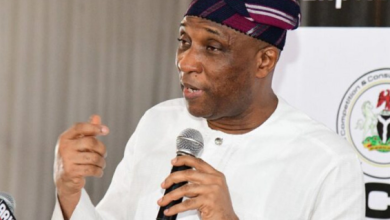
The event, which lasted for about 90 minutes concluded with closing remarks from the President of PEN Nigeria: “As we know, today is about reminding ourselves of the importance of freedom of expression.
As writers, journalists, and creative minds, we know that the pen is mightier than the sword. Therefore, we must continue to be expressive and lend our voices toward building a better tomorrow.”