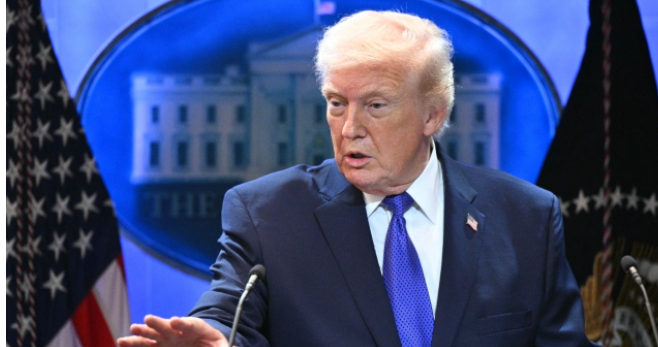
Global oil prices surged on Monday after former U.S. President Donald Trump dismissed Iran’s response to a proposed peace deal, deepening uncertainty over the ongoing conflict and its impact on shipping through the Strait of Hormuz.
The rejection has heightened fears that the 10-week-long crisis may persist, further disrupting maritime traffic in one of the world’s most critical energy corridors.
Iran, in its response to Washington’s earlier proposal aimed at restarting negotiations, demanded a comprehensive end to hostilities across multiple fronts, including the war in Lebanon where Israel is engaged in fighting Hezbollah, an Iran-backed group.
Tehran also insisted on compensation for war damages, recognition of its sovereignty over the Strait of Hormuz, and an end to what it described as a U.S. naval blockade.
It also called for sanctions relief, the removal of restrictions on oil exports, and the release of frozen Iranian assets.
However, Trump swiftly rejected the proposal in a post on Truth Social, saying, “I don’t like it. Totally unacceptable,” without offering further explanation.
The U.S. proposal had sought an initial ceasefire followed by negotiations on broader issues, including Iran’s nuclear programme.
Iranian Foreign Ministry spokesperson Esmaeil Baghaei defended Tehran’s position, insisting its demands were legitimate.
“Our demand is legitimate: demanding an end to the war, lifting the (U.S.) blockade and piracy, and releasing Iranian assets that have been unjustly frozen in banks due to U.S. pressure,” Baghaei said.
He added that Iran was also seeking “safe passage through the Strait of Hormuz and establishing security in the region and Lebanon,” describing the proposals as “a generous and responsible offer.”
Oil markets reacted sharply to the diplomatic breakdown, with prices jumping by about four dollars per barrel before easing slightly later in the day.
Analysts linked the spike to renewed fears that the Strait of Hormuz through which about one-fifth of global oil and liquefied natural gas once passed before the conflict—remains largely inaccessible.
Shipping activity in the waterway has reportedly fallen to minimal levels, with tanker movements significantly reduced due to security risks.
Data from Kpler and LSEG showed only a few crude-carrying vessels successfully exited the strait last week, with some ships turning off tracking systems to avoid possible attacks.
Tensions in the region have continued despite a fragile ceasefire that has paused full-scale fighting since early April, as sporadic incidents continue to threaten maritime safety.
The conflict has also had political and economic repercussions in the United States, where rising fuel prices have become a growing concern ahead of national elections.
International efforts to resolve the crisis remained limited, with NATO allies reportedly hesitant to deploy naval forces without a comprehensive peace agreement and a UN-backed mandate.
Diplomatic engagements continue, however, as Turkish Foreign Minister Hakan Fidan is expected to meet officials in Qatar for discussions on regional security and safe navigation in the strait.
Meanwhile, Trump is expected to visit Beijing later in the week, where the Iran crisis is likely to feature in talks with Chinese President Xi Jinping, amid efforts to pressure Tehran into negotiations.
China has been urged by Washington to use its influence over Iran, although Iranian officials have suggested Beijing could instead challenge U.S. positions in the Gulf region.
Despite ongoing diplomatic exchanges, leaders across the region continue to exchange hardline statements.
Israeli Prime Minister Benjamin Netanyahu insisted the conflict was not yet over, stressing the need to address Iran’s nuclear capabilities and allied armed groups.
Iranian President Masoud Pezeshkian, meanwhile, vowed that Tehran would resist external pressure, declaring that the country would “never bow down to the enemy.”
Regional tensions were further underscored by reports of drone interceptions in the United Arab Emirates, a drone strike near Qatari waters, and air defence activity in Kuwait.
With no clear breakthrough in sight, concerns remain high over the stability of global energy supplies and the broader security of the Gulf region.