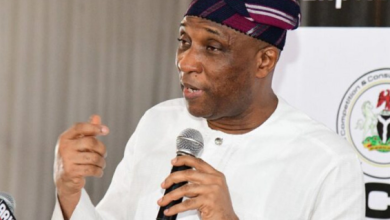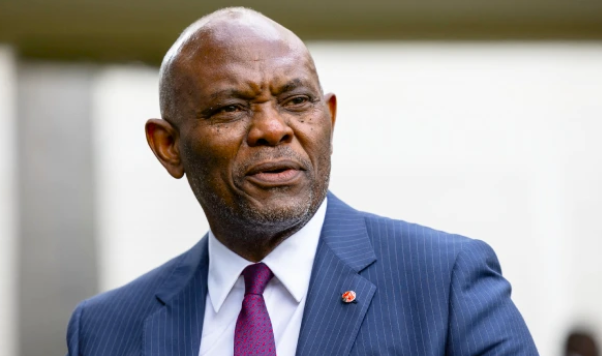
Nigerian businessman and philanthropist Tony Elumelu has called on African nations to move away from what he described as a “victim mentality” and instead embrace global partnerships and private investment to drive development across the continent.
Elumelu made the remarks while speaking on the sidelines of the Africa Forward Summit in Nairobi, Kenya, where policymakers, investors, and development partners gathered to discuss Africa’s economic future.
According to him, Africa’s growth depends largely on attracting large-scale private capital from across the world, without discrimination based on geopolitical alignments.
“What we need in Africa in the 21st century, we need massive private global capital coming into Africa,” Elumelu said.
He added that investors from all regions, including the United States, France, China, Russia, and the Middle East, should be welcomed if they are willing to support Africa’s development agenda.
“Anyone that can help us address this is welcome in Africa,” he stated.
Elumelu, who chairs Heirs Holdings, Transcorp, and the United Bank for Africa, also emphasised the importance of focusing on the future rather than historical grievances linked to colonialism.
“We should stop this victim mentality. We should be cognisant of the history, our history, but more importantly, we should commit to the future,” he said.
He further argued that Africa must not allow its colonial past to limit present-day economic cooperation, noting that global engagement is essential for progress.
“We should, to a large extent, let the past be. President Macron was not born 100 years ago; this is a new age. And I commit to his commitment to Africa, and I believe he’s sincere,” he added.
Elumelu’s comments come amid ongoing debates over France’s role in Africa, with critics in some countries accusing Paris of maintaining neo-colonial influence.
Protests were reported in Nairobi during the summit, where demonstrators expressed opposition to France’s involvement.
Despite such tensions, Elumelu maintained that Africa should prioritise investment and development over political grievances.
He noted that his investment portfolio spans sectors such as energy, banking, hospitality, agribusiness, and real estate, but stressed that infrastructure remains Africa’s most urgent challenge.
“What our young entrepreneurs need in Africa is improvement in access to electricity, creation of mass transportation system, security, and ease of doing business,” he said.
“These are the things that are important.”
Elumelu also highlighted Africa’s demographic advantage, noting that the continent’s youthful population requires urgent job creation and digital inclusion.
“They need jobs, they need improved access to electricity, they need to join the internet, the AI bandwagon,” he said.
He concluded that enabling infrastructure is essential for unlocking the potential of young Africans and accelerating economic transformation.
Elumelu, one of Africa’s leading investors and founder of the Tony Elumelu Foundation, has long advocated entrepreneurship-driven development across the continent.