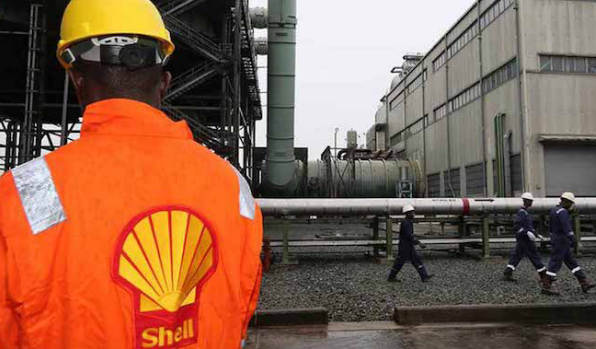
Shell plc has reported a steep decline in payments to the Nigerian government in 2025, with total remittances falling by more than 62 per cent to $2.02 billion following its divestment from onshore oil assets in the country.
Figures contained in the company’s latest “Payments to Governments” report showed that Nigeria received $2.02 billion in 2025, compared to $5.34 billion in 2024, when the country ranked as Shell’s largest global recipient.
The 2025 payments comprised $1.24 billion in production entitlements, $236.99 million in taxes, $454.03 million in royalties, and $87.90 million in fees.
Across its global operations, Shell’s total payments to governments also dropped by about 15 per cent to $23.8 billion in 2025, down from $28.1 billion recorded in 2024.
The payments covered production entitlements, taxes, royalties, bonuses, fees, and other obligations across 26 countries where the company operates extractive assets.
The decline in Nigeria’s receipts was attributed largely to Shell’s continued withdrawal from onshore operations in the Niger Delta, a region long affected by crude theft, pipeline vandalism, operational disruptions, and environmental concerns.
The company has recently completed the sale of its onshore subsidiary assets to a consortium of indigenous firms as part of its broader restructuring strategy.
With the reduced payments from Nigeria, Brazil emerged as one of Shell’s leading beneficiaries in 2025, reflecting increased offshore production activities, particularly in deepwater pre-salt fields.
Norway, Qatar, Malaysia, and Oman also ranked among the top recipients of Shell’s payments during the year.
Shell disclosed that its global production entitlements stood at $8 billion in 2025, while taxes amounted to $10 billion and royalties totalled $3.8 billion. It also paid $360.6 million in bonuses and $1.6 billion in fees within the period.
The report was prepared under the United Kingdom’s Reports on Payments to Governments Regulations 2014, which requires disclosure of payments made in the extractive industries.
It excluded refining and certain gas-processing operations unless they are part of fully integrated upstream projects.
For comparison, Shell had paid $5.34 billion to Nigeria in 2024, making the country its highest global beneficiary that year.
That figure itself marked a rise from the $3.8 billion recorded in 2023.