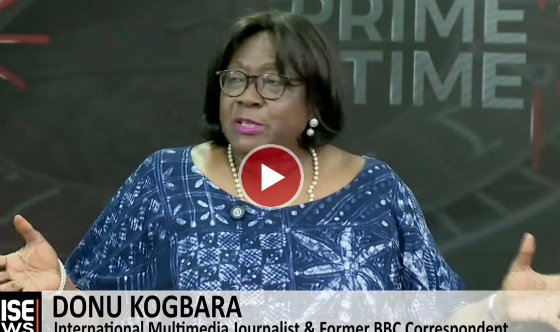
International multimedia journalist and former BBC correspondent, Donu Kogbara, has described the withdrawal of Rivers State Governor Siminalayi Fubara from the political contest in Rivers State as “a complete surrender.”
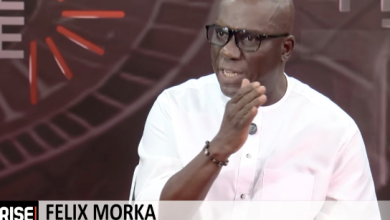
Kogbara made the remarks during an interview on ARISE News on Thursday, where she analysed the unfolding political developments in Rivers State alongside public policy analyst and political communications strategist, Kenny Okolugbo.
“It was a complete surrender of a very weak man,” she said while reacting to Fubara’s decision.
She explained that the political rift between Governor Fubara and the Minister of the Federal Capital Territory, Nyesom Wike, had reached a point where the governor either had to fully resist political pressure or concede ground.
“Either he was going to be able to completely dominate Fubara throughout his tenure as governor, or he was going to be able to remove him if Fubara refused to play along,” she added.
Kogbara said she had initially supported Fubara during the crisis because she believed he was being unfairly treated.
“I supported Fubara, thinking that we can’t allow this man to be completely disgraced,” she said.
She also criticised the culture of political godfatherism, arguing that elected governors should not be compelled to make repeated concessions to political patrons.
“I don’t think that a governor should be so trapped that he has to continuously concede to his godfather,” she said.
According to her, many residents of Rivers State were deeply dissatisfied with the current political situation.
“They are absolutely furious,” she further stated.
During the same programme, Kenny Okolugbo, a public relations analyst, argued that Fubara made strategic mistakes and failed to properly manage relations with members of the Rivers State House of Assembly.
“So I see Fubara as the architect of his own misfortune,” Okolugbo said.
He further stressed that political leaders must understand the structures that bring them into office and manage internal disagreements carefully to avoid deepening political crises.