Nigeria’s economy expanded by 3.89 per cent year-on-year in the first quarter of 2026, according to fresh data released by the National Bureau of Statistics, signalling a continued but gradual recovery across key sectors.
The latest figure marked an improvement over the 3.13 per cent recorded in the corresponding period of 2025, reflecting modest gains in agriculture, industry, and services.
The report showed that the agricultural sector recorded stronger performance, growing by 3.15 per cent in Q1 2026 compared to just 0.07 per cent in the same period last year, indicating a notable rebound in crop production.
The industrial sector also posted an increase of 3.50 per cent, slightly higher than the 3.42 per cent recorded in Q1 2025, while the services sector grew by 4.31 per cent, marginally below the 4.33 per cent recorded a year earlier.
In nominal terms, aggregate GDP at basic prices stood at N110.79 trillion in Q1 2026, representing a significant rise from N94.05 trillion recorded in Q1 2025, translating to a year-on-year nominal growth of 17.79 per cent.
The data further revealed that the services sector remained the dominant contributor to economic output, accounting for 57.73 per cent of GDP, slightly higher than its 57.50 per cent share in the same period of 2025.
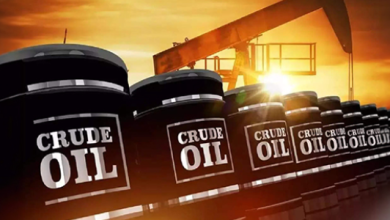
Oil production averaged 1.55 million barrels per day during the quarter, lower than the 1.62 million barrels per day recorded in Q1 2025 and also below the 1.58 million barrels per day produced in Q4 2025.
Despite the decline in output, the oil sector grew by 2.57 per cent year-on-year, an improvement over the 1.87 per cent recorded in the corresponding quarter of 2025, though significantly lower than the 6.79 per cent growth recorded in Q4 2025.
Quarter-on-quarter, the oil sector expanded by 9.31 per cent, highlighting short-term gains despite broader volatility in production levels.
The oil sector contributed 3.92 per cent to total real GDP, slightly below the 3.97 per cent recorded in Q1 2025 but higher than the 2.87 per cent recorded in the previous quarter.
The non-oil sector grew by 3.94 per cent, outperforming the 3.19 per cent recorded in Q1 2025, driven largely by telecommunications, agriculture, manufacturing (cement), financial services, real estate, construction, and transportation.
In terms of contribution, the non-oil sector accounted for 96.08 per cent of real GDP, underscoring its continued dominance in the structure of the economy.
Mining and quarrying activities also showed mixed performance, with crude oil and natural gas remaining the largest contributors within the sector, accounting for over 90 per cent of output.
Overall, the data indicated steady macroeconomic growth, supported mainly by non-oil activities, even as oil production continues to fluctuate amid structural and operational challenges.