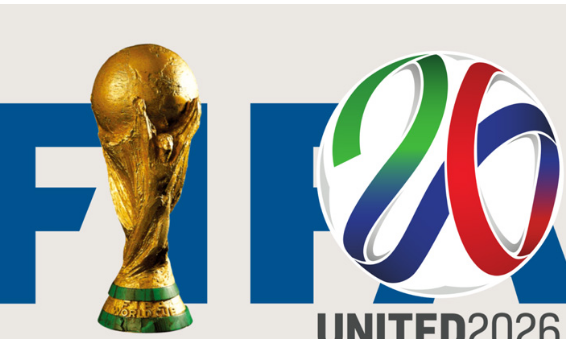
The 2026 FIFA World Cup is set to mark a historic turning point in international football, with an expanded 48-team format, 104 matches, and three host nations, the United States, Canada and Mexico combining to stage the biggest tournament in the competition’s history.
The enlarged structure is expected to open the door for emerging football nations while increasing the likelihood of unexpected runs deep into the knockout stages.
However, despite the broader field, traditional powerhouses are still widely tipped to dominate the race for the trophy.
From seasoned champions chasing further glory to rising sides hoping to make their mark, the tournament is shaping up to deliver a wide range of compelling narratives from the opening whistle to the final.
The tournament begins on Thursday with Mexico facing South Africa in Mexico City, alongside an opening ceremony featuring major Latin American performers and global stars such as Shakira, while Nigeria’s Burna Boy is expected to headline the official tournament song.
Beyond entertainment, FIFA is introducing a series of technological and rule-based innovations designed to improve match flow and decision-making accuracy.
These include upgraded semi-automated offside systems, a sensor-enabled match ball that transmits real-time data to video officials, and expanded VAR authority covering clearer disciplinary and identity errors.
To reduce time-wasting, visible countdown systems for throw-ins and goal kicks will be enforced, while substitution procedures have also been tightened.
One of the most debated additions is the introduction of mandatory three-minute hydration breaks in each half, a measure FIFA says is necessary to protect players from extreme heat conditions expected in some host cities.
Critics, however, argue it may disrupt match rhythm in cooler environments.
Defending European champions Spain enter the tournament as one of the strongest favourites.
Their squad blends technical excellence with tactical versatility, allowing them to dominate possession, press aggressively, and transition quickly in attack.
Unlike earlier generations, this Spanish side is not reliant on a single style, making them harder to predict and contain.
A balance of experienced leaders and emerging talents has made Spain one of the most complete teams heading into the competition.
France arrive with arguably the deepest squad in world football, boasting elite talent across every position.
Their combination of physical strength, tactical discipline and attacking firepower makes them one of the most consistent contenders for major titles.
The tournament also carries added significance for coach Didier Deschamps, who is expected to step down after the competition.
A second World Cup title as manager would further cement his legacy among football’s greats.
Defending champions Argentina return with much of the squad that lifted the trophy in Qatar still intact.
Their experience, cohesion and mental resilience remain key strengths, particularly in knockout football where marginal details often decide outcomes.
Much attention will once again fall on Lionel Messi, who is expected to be making his final World Cup appearance at 39, adding emotional weight to Argentina’s campaign.
Portugal’s Strongest Generation Yet
Portugal enter with one of the most balanced squads in their history, blending elite experience with emerging stars.
Cristiano Ronaldo remains the central figure, aiming to complete his career with the only major trophy missing from his collection.
Support comes from a strong supporting cast including Bruno Fernandes, Vitinha, Bernardo Silva and Rafael Leão, giving Portugal both creativity and depth across the pitch.
Many analysts view them as genuine contenders capable of challenging for the title.
Brazil arrive with less external pressure than in previous tournaments, but still possess significant attacking quality.
Vinícius Júnior is expected to play a central role alongside Neymar, Raphinha and a strong supporting group featuring Alisson Becker, Bruno Guimarães, Gabriel Magalhães and others.
Coach Carlo Ancelotti has attempted to blend experience with youth in a bid to restore Brazil to the top of world football for the first time since 2002.
Germany appear to be rebuilding successfully with a mix of youth and experience, while England continue to rely on a talented generation seeking to end their long wait for major silverware.
Colombia’s attacking strength and Morocco’s continued rise following their historic 2022 World Cup run make both sides dangerous outsiders capable of deep progression.
Morocco, in particular, remain Africa’s strongest hope after establishing themselves as the first African nation to reach a World Cup semi-final.
A number of standout individuals are expected to define the competition.
Spain’s Lamine Yamal represents the new generation of global stars, while France’s Kylian Mbappé remains one of the most decisive players in world football.
Argentina’s Lionel Messi continues to carry legendary status into what may be his final appearance, while Brazil’s Vinícius Júnior is expected to lead his nation’s attack.
Portugal’s Cristiano Ronaldo approaches another World Cup with unfinished business, supported by key midfielders Bruno Fernandes and Vitinha.
Elsewhere, Norway’s Erling Haaland finally makes his World Cup debut, while France’s Michael Olise is tipped as one of the tournament’s potential breakout stars.
Morocco lead Africa’s challenge, followed by Senegal, Egypt and Côte d’Ivoire, all of whom bring a mix of experience, structure and attacking quality.
Senegal remain physically strong and tactically disciplined, while Egypt will rely heavily on Mohamed Salah’s leadership. Côte d’Ivoire, meanwhile, enter with confidence following recent continental success.
Forecasting a World Cup winner is especially difficult in an expanded 48-team format where surprises are more likely than ever.
However, Spain, France, Portugal and Argentina stand out as the most complete and consistent sides based on current form and squad depth.
A potential Spain–France final would represent a clash between two of the strongest footballing systems in the world, though the scale of the tournament ensures that unexpected outcomes remain a constant possibility.
Ultimately, the 2026 World Cup may be remembered not only for its favourites, but for the breakthrough story that emerges from football’s biggest stage.