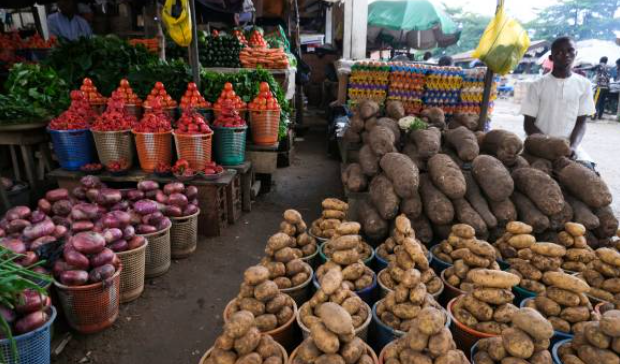
As Nigeria marks 27 years of democracy, stakeholders say democratic governance has helped expand agricultural policies and improve food production nationwide.
Former Commissioner for Lands and Survey in Delta and farmer, Mr Raymos Guanah, urged states to adopt large-scale agricultural zoning for food security.
Guanah in a interview on Friday in Asaba, proposed that states deliberately cultivate at least 10,000 hectares per crop, such as rice and cassava.
”State governments should deliberately cultivate at least 10 ,000 hectares of land for specific products.
”For example Delta can dedicate 10,000 ha to rice, edo 10,000ha for cassava and so on and so forth.
”By so doing,we will have food security.
Farmers should be encouraged by off taking all their products, ” he said.
Guanah said structured land use planning would ensure steady food supply, reduce imports, and strengthen national food resilience.
He stressed the need for guaranteed off-take systems to ensure farmers’ produce is purchased and none is wasted after harvest.
According to him, adding value through processing will boost income, create jobs, and transform agriculture into a stronger economic sector.
Since 1999, democracy has enabled successive governments to introduce policies aimed at increasing food production and rural development.
Guanah said democratic governance has strengthened farmers’ voices in policy formulation and improved attention to food security concerns.
”Governments have invested in rural roads, irrigation systems, storage facilities, and extension services to support agricultural growth.
”These investments have improved access to markets, reduced post-harvest losses, and enhanced rural livelihoods.
”Agricultural intervention schemes have also provided improved seedlings, fertilizers, machinery, and credit support to farmers, ” he said.
Guanah noted increased output of rice, cassava, maize, yam, and other staples as evidence of policy progress.
He added that cooperatives and private-sector partnerships have expanded access to markets and strengthened agricultural value chains.
Guanah, however, warn that insecurity, flooding, climate change, and high production costs still limit full food security.
He called for stronger investment in mechanised farming, irrigation, storage, and rural infrastructure to boost productivity.
Guanah also insisted that sustained reforms in agriculture are vital to securing Nigeria’s future food needs.