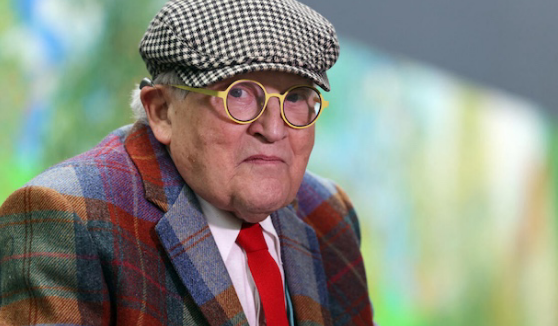
Renowned British artist David Hockney, celebrated worldwide for his vibrant paintings of California landscapes, swimming pools and portraits, has died at the age of 88.
The news of his passing was confirmed on Thursday by his publicist, Erica Bolton. No details regarding the cause of death were made public.
For more than six decades, Hockney stood among the most influential figures in contemporary art, earning admiration for his bold creativity, striking use of colour and constant willingness to explore new artistic frontiers.
Born in Bradford in northern England, Hockney developed a fascination with light and colour at an early age.
The glamour and brightness he saw in Hollywood films offered a sharp contrast to the industrial surroundings of his upbringing, sparking an artistic curiosity that would later define much of his work.
Following his studies in London, Hockney emerged as one of the leading voices of Britain’s pop art movement.
His distinctive style and willingness to openly express his identity challenged social conventions at a time when homosexuality was still criminalised in the United Kingdom.
In search of new inspiration, he travelled to the United States before eventually making California his home. The region’s sunshine, architecture and relaxed lifestyle profoundly influenced his artistic direction.
There, Hockney produced some of the most recognisable works of his career.
His paintings featuring sparkling swimming pools, elegant homes and intimate portraits became enduring symbols of Southern California’s culture and appeal.
Despite attaining global recognition, Hockney remained committed to innovation.
Friends, admirers and critics often praised his relentless curiosity, noting that he never stopped experimenting with new forms of artistic expression.
Throughout his career, he embraced emerging technologies, producing artworks through a variety of mediums ranging from fax machines to digital tablets, while continuing to refine traditional painting methods.
His influence extended beyond galleries and museums. In 2018, one of his most acclaimed masterpieces, Portrait of an Artist (Pool with Two Figures), sold for more than $90 million at auction, setting a record at the time for the highest price paid for a work by a living artist.
Later in life, Hockney frequently returned to northern England, where the Yorkshire countryside inspired a new series of celebrated landscape paintings.
He later settled in Normandy, France, drawing inspiration from the region’s changing seasons and natural beauty to create large-scale works.
Even in his final years, the artist remained actively engaged in painting and drawing.
He often maintained that creativity was a lifelong pursuit rather than a profession from which one simply retires.
His death marks the conclusion of an extraordinary artistic journey that spanned generations.
Through a body of work that continually pushed creative boundaries, David Hockney leaves behind a legacy that helped redefine contemporary painting and secured his place among the most respected artists of the modern era.