Fresh optimism emerged on Friday over a possible end to the three-month conflict between the United States and Iran after President Donald Trump suggested that a peace agreement could be signed within days, although Tehran maintained that a final decision had not yet been reached.
If concluded, the accord would represent the most significant diplomatic breakthrough since hostilities erupted earlier this year, a conflict that has claimed thousands of lives and disrupted global energy markets following restrictions on shipping through the strategically important Strait of Hormuz.
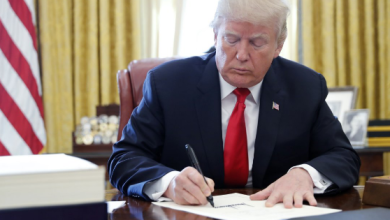
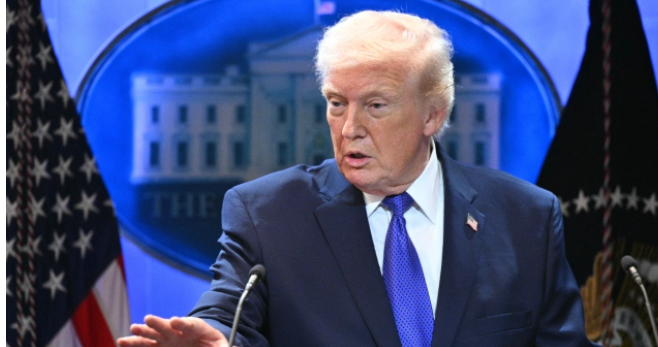
Speaking to reporters at the White House on Thursday, Trump expressed confidence that negotiations were nearing completion and said the agreement could be formalised as early as this weekend.
“We just made a great settlement of the war with Iran.
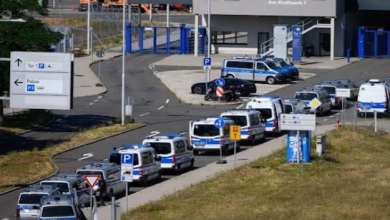
“The strait will officially open as soon as we sign, which could be soon, very soon, maybe over the weekend in Europe,” he said, noting that Vice President JD Vance would attend the signing ceremony.
When asked whether Iran’s Supreme Leader, Mojtaba Khamenei, had endorsed the proposed agreement, Trump replied: “I understand the answer is yes.” Iran has not publicly confirmed that claim.
Despite the upbeat tone from Washington, Iranian officials urged caution.
Tehran acknowledged that progress had been made but insisted that discussions were still ongoing and that critical issues remained under review.
Iranian Foreign Ministry spokesperson Esmaeil Baghaei said substantial portions of the proposed framework had been agreed upon but stressed that Iran would not compromise on what it considers its core interests.
“We have not reached a final conclusion on this matter,” he said.
“This is a very important issue that is currently being reviewed by the relevant decision-making bodies.”
The prospect of a breakthrough boosted investor confidence across global markets.
Asian stocks advanced while oil prices fell sharply, reflecting expectations that a reopening of the Strait of Hormuz could ease pressure on energy supplies and reduce market uncertainty.
However, tensions in the region have not completely subsided. Reports indicated that US forces intercepted two Iranian drones near the strait after an alleged attempt to target commercial shipping.
Iranian media also reported that authorities prevented a tanker from passing through the waterway, while explosions were heard in the area during the early hours of Friday.
Trump’s latest comments came shortly after he cancelled planned military strikes against Iran, citing progress in ongoing negotiations.
“It’s a very strong memorandum of understanding that is a little conceptual,” the president told reporters as discussions continued.
A central pillar of the proposed agreement remains Washington’s demand that Iran never acquire a nuclear weapon.
Trump reiterated that position during a campaign event, insisting that the issue was non-negotiable.
“The big thing is there will be no nuclear weapons in Iran. That means not developed and not purchased,” he said.
According to reports, Iran is seeking extensive sanctions relief, access to frozen financial assets and recognition of its authority over shipping management in the Strait of Hormuz as part of any final settlement.
The conflict has also generated political challenges for the White House.
Rising fuel prices and concerns over the economic impact of the war have placed pressure on the administration, while divisions have emerged within Republican circles over how far negotiations with Tehran should go.
At the same time, some conservative voices continue to insist that any agreement must permanently eliminate Iran’s ability to pursue a nuclear weapons programme.
Regional reactions are expected to play a major role in determining the success of any accord.
Trump stated that several Middle Eastern governments, including Saudi Arabia, Qatar and the United Arab Emirates, had expressed support for the agreement.
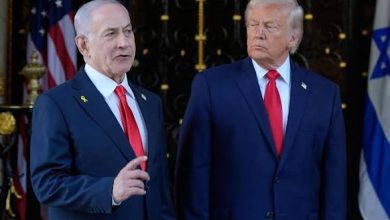
However, the office of Israeli Prime Minister Benjamin Netanyahu clarified that Israel was not a party to the proposed memorandum of understanding with Iran.
Following discussions with Trump, Netanyahu’s office said Israel welcomed efforts to secure an arrangement that would include the removal of enriched nuclear material, restrictions on missile development, dismantling of enrichment infrastructure and an end to support for regional proxy groups.
Meanwhile, Tehran continues to push for an end to Israeli military operations in Lebanon, where clashes involving the Iran-backed organization Hezbollah remain tied to the wider regional confrontation.
While negotiators appear closer to an agreement than at any point since the conflict began, uncertainty remains over whether the final obstacles can be overcome and whether both governments are prepared to make the concessions necessary to secure a lasting peace.