Former Nigerian Ambassador to Thailand, Oma Djebah, has described the June 12 struggle as a watershed moment in Nigeria’s democratic evolution, saying it inspired national unity and created a movement that transcended ethnic, regional and political boundaries.
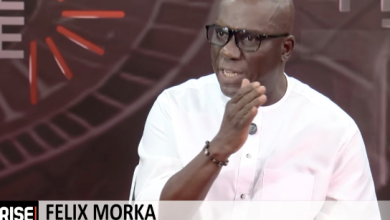
Speaking on ARISE News on Friday as part of activities marking Democracy Day, Djebah reflected on the historic June 12, 1993 presidential election and the events that followed its annulment.
Drawing from his experience as a journalist who covered the period firsthand, he said the era remains one of the most significant chapters in Nigeria’s political history.
“The June 12 era was one of the most critical eras in Nigeria’s history. It marked the resilience of the Nigerian people and the resilience of the Nigerian press,” he said.
Djebah noted that journalists who reported the crisis witnessed both the challenges and sacrifices that defined the struggle for democracy.
He added that the experience remains a reminder of a difficult period that Nigerians would not wish to relive.
“Speaking more as a journalist and as a diplomat, and as one of those who reported that era and witnessed it, we pray that Nigeria never witnesses such an era anymore,” he stated.
According to him, the annulment of the election won by the late Chief Moshood Kashimawo Olawale Abiola became a rallying point that united citizens across the country and strengthened the push for democratic governance.
He said the events of the period gave rise to a renewed sense of national purpose and solidarity, with various groups joining forces to challenge military rule and demand the restoration of the people’s mandate.
“The significance of that particular era is that it brought our country together. It marked a period of national rebirth and national unity because NADECO was born out of that struggle,” he said.
Djebah explained that the media played a central role in amplifying the activities and message of the National Democratic Coalition, helping to sustain public awareness and support for the movement.
“The media amplified that platform and gave it birth and strength and invigorated it,” he noted.
He further recalled that the coalition attracted respected figures from different parts of the country, demonstrating the broad national character of the struggle.
“Within that NADECO, you had people from all over the country. You had Dan Suleiman, who the President referred to earlier today.
”You had Anthony Enahoro, who was a journalist and who moved the motion for self-government in 1953,” he said.
Djebah argued that the June 12 election remains a powerful symbol of national unity because of the overwhelming support Abiola received across regional and ethnic lines.
“That period of national strength, national unity and national rebirth was the original symbolism of June 12 because he won across the country,” he stated.
Describing the election as a major milestone in Nigeria’s democratic history, he said many Nigerians were left puzzled by the military’s decision to disregard the outcome.
“It was a very major milestone, and it remained a puzzle why that social affirmation was ignored by the military,” he added.
The former ambassador also paid tribute to the Nigerian media, saying journalists at the time did far more than simply report events.
According to him, members of the press became active participants in the democratic movement through their coverage and advocacy.
“The Nigerian media, in my view, covering that era back to back, were not observers. They were active participants,” he said.
June 12 is observed annually as Nigeria’s Democracy Day in recognition of the 1993 presidential election, widely regarded as the freest and fairest poll in the nation’s history, as well as the pro-democracy struggle that followed its annulment by the military government.