Nigeria has reaffirmed its dedication to international peacekeeping and multilateral cooperation, as the United Nations and the Nigeria Police Force called for greater investment in peacebuilding amid rising global conflicts, insecurity and humanitarian challenges.
The renewed commitment was expressed on Wednesday during the 2026 International Day of United Nations Peacekeepers commemorated in Abuja.
The event brought together government officials, diplomats, security agencies, development partners and serving peacekeepers to honour the contributions and sacrifices of personnel serving under the United Nations banner.
Held under the theme, “Invest in Peace,” the ceremony highlighted the growing need for nations to strengthen efforts aimed at preventing conflicts and promoting stability in an increasingly uncertain world.
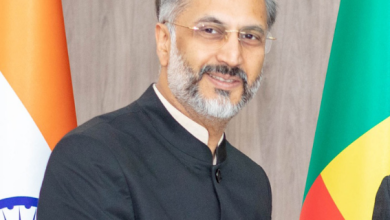
Speaking at the event, the United Nations Resident Coordinator in Nigeria, Mohammed Fall, described peacekeeping as one of the strongest symbols of global solidarity and cooperation.
He noted that peace remains the bedrock of sustainable development and human progress, stressing that lasting stability cannot be achieved through security measures alone.
According to him, meaningful peace requires sustained investments in education, justice, youth empowerment, social cohesion and inclusive development programmes.
“Every investment in peace is an investment in humanity,” he said, echoing the position of António Guterres that sustainable development can only thrive where peace exists.
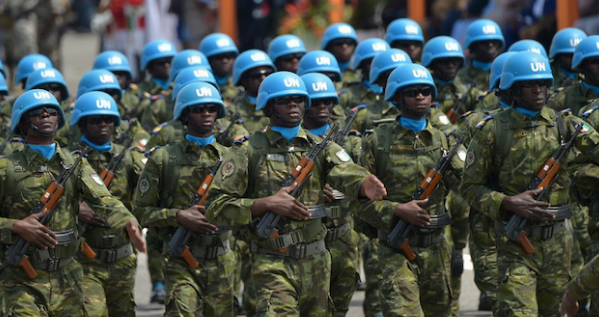
The United Nations revealed that since the establishment of peacekeeping operations in 1948, more than two million individuals have served in missions across the globe. Currently, over 87,000 military, police and civilian personnel are deployed in various operations aimed at maintaining international peace and security.
The organisation also commended Nigeria’s longstanding role in global peacekeeping, noting that the country has contributed more than 200,000 military and police personnel to 41 peace support missions since the 1960s.
According to the UN, Nigeria presently has 335 uniformed personnel serving in peacekeeping operations worldwide, including 138 officers from the Nigeria Police Force.
The Resident Coordinator praised Nigerian peacekeepers for their professionalism, courage and commitment in difficult environments, stating that their efforts have helped protect civilians, strengthen democratic institutions and support recovery in post-conflict societies.
“You carry trust. You carry the hopes of families you protect. You walk into difficult places so others can live in safety.
”You stand between uncertainty and stability,” he told Nigerian personnel serving in United Nations missions.
In his address, Inspector-General of Police, Olatunji Disu, paid tribute to peacekeepers who lost their lives while serving in conflict zones around the world.
He disclosed that more than 4,500 peacekeepers have died since the launch of UN peacekeeping operations nearly eight decades ago, describing their sacrifices as vital contributions to global stability.
“Peace is not free. It is often secured through extraordinary acts of courage, selflessness and dedication,” Disu said.
The police chief highlighted Nigeria’s significant contributions to international peace missions, noting that Nigerian police officers have distinguished themselves in areas including civilian protection, electoral support, post-conflict reconstruction, institution building and community policing.
According to him, the professionalism displayed by Nigerian officers has earned the country widespread recognition and reinforced its reputation as a dependable partner in promoting international peace and security.
Disu also used the occasion to advocate increased investment in peacebuilding initiatives, arguing that preventing conflicts is more sustainable and less costly than responding after violence has already erupted.
“Investing in peace means strengthening institutions, promoting justice, protecting human rights and addressing the root causes of instability before they escalate into conflict,” he said.
The Inspector-General further stressed the importance of continuous training and capacity development for peacekeepers, explaining that modern peace operations demand personnel equipped with mediation skills, operational competence, cultural understanding and strong community engagement abilities.
He also called for greater participation of women in peacekeeping missions, noting that inclusive peace processes often produce stronger and more lasting outcomes.
Disu reserved special recognition for the families of peacekeepers, describing them as unsung heroes whose support and sacrifices make international service possible.
Government representatives reiterated Nigeria’s support for international cooperation, collective security efforts and reforms aimed at improving the effectiveness of the United Nations in addressing emerging global challenges.
The United Nations, in turn, commended the administration of Bola Tinubu for its efforts to promote peace, security and national stability, observing that peacekeeping abroad and peacebuilding at home are closely interconnected.
The organisation reaffirmed its commitment to working with government institutions, civil society groups, traditional leaders, women, youth organisations and development partners to advance dialogue, human rights, humanitarian support and social cohesion across Nigeria.
Speakers at the event agreed that peace should be viewed not merely as the absence of conflict but as the presence of justice, opportunity and human dignity.
They stressed that sustained investments in education, healthcare, youth empowerment, community development and accountable institutions remain essential for preventing violence and building resilient societies.
As terrorism, political instability, displacement and armed conflicts continue to threaten global security, participants called for stronger international cooperation and a renewed commitment to the ideals of the United Nations.
They maintained that the greatest legacy of the present generation would be the creation of a peaceful world where future generations can live in safety, dignity and hope.
The ceremony coincided with Nigeria’s renewed commitment to the principles of the United Nations Charter as preparations continue for the 81st session of the United Nations General Assembly.